
Collection: Sale
Everything currently marked down, across every category. Prices here move, so a piece you saw last week may be back at full price this week. Filtering by category narrows it faster than scrolling the whole thing.

-
LED Floating Candles with Wand Remote, Hanging Set
Save 44%Regular price From $39.00 USDRegular price$70.00 USDSale price From $39.00 USDSale -
Peekaboo Plush Panda with Music and Moving Paws
Save 48%Regular price $39.00 USDRegular price$75.00 USDSale price $39.00 USDSale -
Electric Callus Remover for Feet, Two Colors
Save 43%Regular price $49.95 USDRegular price$89.00 USDSale price $49.95 USDSale -
Knitted Throw Blanket with Corner Tassels
Save 43%Regular price $82.97 USDRegular price$147.00 USDSale price $82.97 USDSale -
Wooden Taper Candle Holders, Short and Tall
Save 47%Regular price $19.97 USDRegular price$38.00 USDSale price $19.97 USDSale -
Blue and White Ceramic Vase, Short, Tall, or Pair
Save 34%Regular price From $36.95 USDRegular price$56.00 USDSale price From $36.95 USDSale -
Heart-Shaped Chunky Knot Cotton Cushion, Twelve Colors
Save 43%Regular price $64.97 USDRegular price$115.00 USDSale price $64.97 USDSale -
Glossy Resin Pineapple Ornament, Three Sizes
Save 44%Regular price From $19.95 USDRegular price$36.00 USDSale price From $19.95 USDSale -
Black Walnut Leaf Serving Trays, Three Sizes
Save 50%Regular price From $38.95 USDRegular price$79.00 USDSale price From $38.95 USDSale -
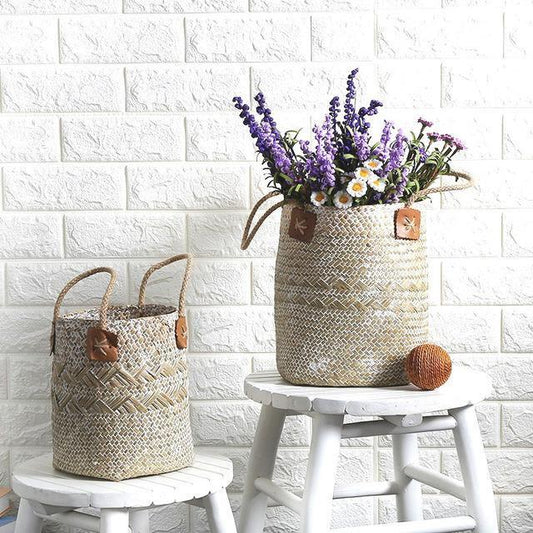
Seagrass Storage Bins with Rope Handles
Save 54%Regular price From $36.97 USDRegular price$82.00 USDSale price From $36.97 USDSale -
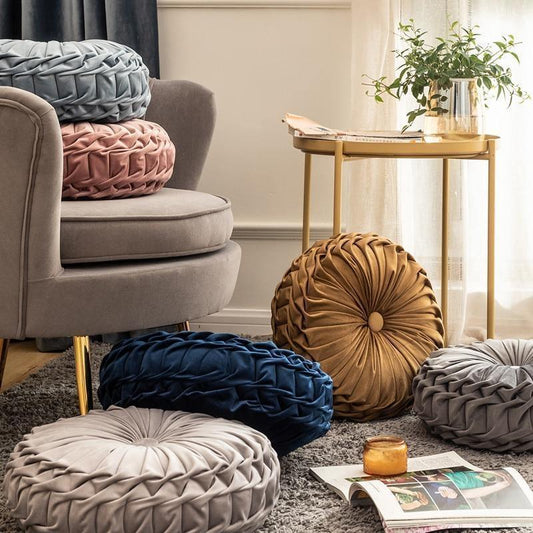
Round Velvet Ruffle Cushion with a Center Button
Save 32%Regular price $50.97 USDRegular price$75.99 USDSale price $50.97 USDSale -
Wall Mounted Wooden Bud Vase with Glass Vial
Save 32%Regular price $52.97 USDRegular price$79.00 USDSale price $52.97 USDSale -
Glass Storage Jars with Acacia Wood Lids, 5 Sizes
Save 54%Regular price From $24.97 USDRegular price$55.00 USDSale price From $24.97 USDSale -
Electroplated Gold Glass Bud Vase, Solid or Gradient
Save 43%Regular price From $29.00 USDRegular price$51.00 USDSale price From $29.00 USDSale -
Three-Tier Macrame Hanging Shelf
Save 43%Regular price $107.97 USDRegular price$192.00 USDSale price $107.97 USDSale -
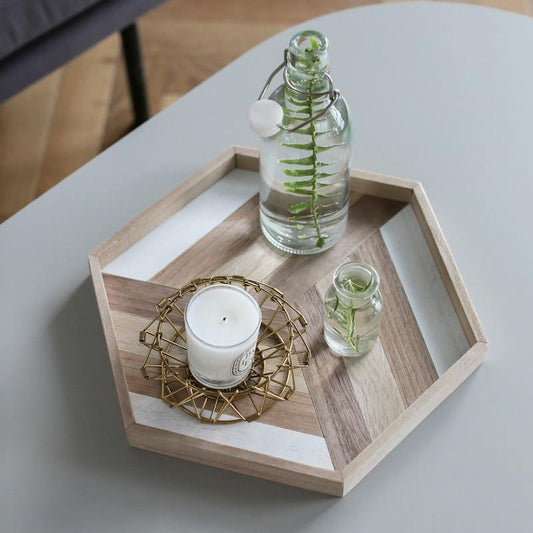
Hexagon Patterned Wooden Serving Platter
Save 50%Regular price $59.98 USDRegular price$121.00 USDSale price $59.98 USDSale -
Ceramic Planter Pot with Galvanized Steel Stand
Save 42%Regular price $27.00 USDRegular price$47.00 USDSale price $27.00 USDSale -
Leaf Shaped Ceramic Platters with Gold Rim
Save 54%Regular price From $29.99 USDRegular price$66.00 USDSale price From $29.99 USDSale -
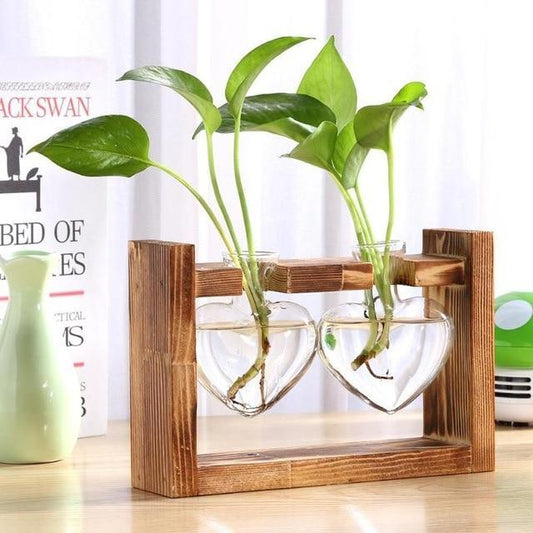
Heart Shaped Glass and Wood Propagation Vase
Save 45%Regular price From $29.95 USDRegular price$54.99 USDSale price From $29.95 USDSale -
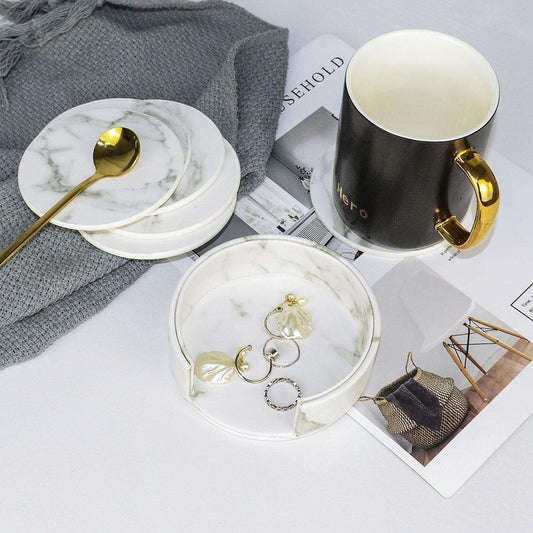
Marbled Vegan Leather Coaster Set with Caddy
Save 39%Regular price From $22.99 USDRegular price$38.00 USDSale price From $22.99 USDSale -
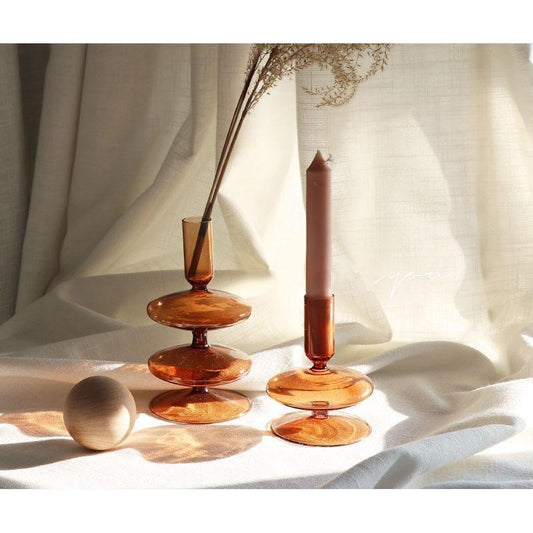
Brown Borosilicate Glass Taper Candle Holders
Save 43%Regular price From $36.97 USDRegular price$66.00 USDSale price From $36.97 USDSale -
Chunky Knit Throw Blanket in Wool Acrylic Blend
Save 43%Regular price From $42.97 USDRegular price$76.00 USDSale price From $42.97 USDSale -
Neutral Matte Ceramic Vases, Six Shapes, Dry Use Only
Save 29%Regular price From $75.97 USDRegular price$107.00 USDSale price From $75.97 USDSale -
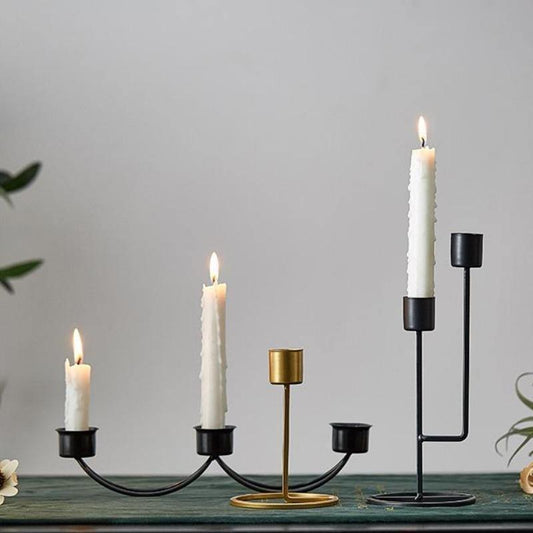
Metal Taper Candle Holders and 2 or 3 Arm Candelabras
Save 44%Regular price From $25.95 USDRegular price$47.00 USDSale price From $25.95 USDSale










































What a sale page actually is
This page is a filter on a single flag: whether a piece currently carries a price lower than its usual one. That is the only thing everything here has in common. It is not a category, not a clearance run, and not a selection anybody sat down and curated.
Two consequences follow, and both are worth knowing before you scroll. Prices move in both directions, so a piece you saw reduced last week can be back at its normal price this week and neither is a mistake. And a piece dropping off this page has not been discontinued, it has simply stopped being reduced, and it is still sitting in its own category exactly where it was.
So treat this page as a snapshot rather than a list. If a specific piece matters to you, open its own page and save that, because a product page is a stable address and a collection page is a query that gets rerun every time somebody loads it.
Filter first, then scroll
A sale page pulls from every category at once, so the grid puts a vase next to a pet bowl next to a wall hook. Scrolling that from top to bottom is the slowest possible way to use it, and it is what most people do.
Work the other way around. Decide what you are actually looking for, filter to that category, and then sort by price. What you want from this page is the intersection of two facts, that a piece is the kind of thing you need and that it happens to be reduced right now. Browsing the whole grid gets you the second fact without the first, which is how a page like this sells people a coaster set they did not want.
If you have no particular need, that is fine too, but be honest that you are browsing rather than shopping. The two behave differently at checkout, and the second one is what a returns policy exists for.
Working out whether a discount is a discount
The arithmetic is simple and worth doing in your head. To get the sale price, multiply the original by one minus the discount. To go the other way and recover the original from a sale price, divide by that same figure. Something reduced 40 percent to 30 dollars was 50 dollars, because 30 divided by 0.6 is 50.
The one that catches people is stacking. Two discounts do not add. Twenty percent off followed by another twenty percent is 36 percent off in total, not 40, because the second reduction applies to the already reduced number. Thirty and then twenty is 44 percent, not 50. If the total sounds too neat, it is being added rather than multiplied.
| Percent off | A 100 dollar item becomes | To recover the original, divide by |
|---|---|---|
| 10% | 90 | 0.90 |
| 20% | 80 | 0.80 |
| 25% | 75 | 0.75 |
| 30% | 70 | 0.70 |
| 40% | 60 | 0.60 |
| 50% | 50 | 0.50 |
| 70% | 30 | 0.30 |
The question that beats every percentage
Percentages are relative to a number somebody else chose, which makes them the easiest figure in retail to argue with and the hardest to trust. There is one test that no reference price can influence: cover the crossed out number with your thumb and ask whether you would buy the thing at the price that is left.
If the answer is yes, the discount is irrelevant and you have found something you want at a price you accept. If the answer is no, then no percentage fixes that, because the saving is money you were never going to spend. A piece bought for 40 percent off that sits in a cupboard cost you 60 percent of its price, not nothing.
Two smaller checks catch most of the rest. Name the surface it goes on before you add it to the cart, out loud if necessary. And watch the free shipping threshold, because the item you add to cross it is being chosen by the threshold rather than by you, and it is usually the thing that gets returned.
Read the count, the variant and the size
A grid shows a photograph and a price and almost nothing else, and three details hide in that gap. The first is quantity. A set of twelve and a single piece look identical as thumbnails, and the only comparable figure is the price divided by the count. A reduced set is only a saving if you actually need that many.
The second is variants. On a piece sold in several colors or sizes, the reduction sometimes applies to one of them rather than all, and the grid shows whichever one is cheapest. Select the variant you want and check that the number on the page is still the number that brought you here.
The third is size, which is the same trap in a different coat. A range sold in small, medium and large will show the small one's price, and the small one is often much smaller than the photograph implies. Read the dimensions on the product page before anything else.

| What the grid shows | What to check on the product page |
|---|---|
| One photograph | Whether that is one item or a set, and how many are in the box |
| One price | Whether it holds after you select the color and size you want |
| A styled scene | The stated dimensions, since photographs carry no scale |
| A percentage badge | The price with the badge covered up. That is the real number |
| Nothing about returns | Whether the listing says final sale anywhere on it |
| Nothing about weight | What shipping costs on something heavy or awkward |
Returns on something reduced
A reduced item is usually returnable on the same terms as a full price one, because the price a thing sold at does not normally change your rights over it. The exception is a listing marked final sale, which means no return and no exchange, and that has to be stated on the listing rather than implied by the fact of a discount.
So check before ordering rather than after. Read the returns page once, look for the words final sale on the product page, and note the return window in days from delivery rather than from the order date, since those are often different by a week.
The practical habit is duller than the policy. Keep the packaging until the piece is actually where it is going to live, not until it arrives. Most decor returns happen at the point of placing the object, which is a day or two after the box lands, and a piece already broken down for recycling is harder to send back than one still in its carton.
When decor genuinely gets cheaper
There is a rhythm to it, and it is more predictable than any individual promotion. Seasonal decoration falls hardest in the week immediately after its season, which makes the first days of January the single most reliable moment to buy holiday pieces. The cost is that you store them for eleven months, so the saving is real only for things that store flat and do not perish.
Outdoor and garden pieces follow the same pattern at the end of summer, as stock that cannot sit in a warehouse over winter gets moved. General home decor is looser, but late January and late summer are both quiet retail periods where old stock gets cleared before new ranges land.
Against all of that, one thing is worth saying plainly. Waiting for a sale works for a purchase you can postpone, like next year's ornaments or a piece you want but do not need. It works badly for a specific hole in a room you are living in now, because you will spend six months looking at the gap and then buy something at full price anyway.
The reduced pieces worth taking home
Look at what survives a year in a house and the pattern is the same whether a thing was reduced or not. The pieces that stay are the ones that took over a job something else was doing badly. Hooks by a door that ended the pile of bags on a chair. A lidded box that ended the cable drawer. A bowl that ended keys on the kitchen counter.
That is the useful filter for a page like this one. A reduced object that fixes an annoyance is a good purchase at any percentage. A reduced object with no job is a full price mistake at a lower number, and the discount is what made it feel like neither.
Almost everything sold here is a container of some sort, which gives you one last question before checkout. What is going inside it, and do you already own that thing? If the answer requires you to start a new habit, the object is not what you are buying.

Common questions
Does final sale mean not returnable?
Yes. Final sale means the item cannot be returned or exchanged once it ships, and the seller has to say so on the listing or at checkout rather than leaving you to infer it from the discount. A reduced item without that label normally falls under the standard returns policy. If you cannot find the words on the product page, check the returns page before ordering rather than after.
Can I get a refund if all sales are final?
Not for changing your mind, which is what a final sale policy is designed to exclude. It does not cover a faulty item, a piece damaged in transit, or something materially different from the description, since those are handled separately and consumer law in most places does not let a policy sign them away. Photograph the packaging and the damage before you unpack any further.
How do I find the original price from a discount?
Divide the sale price by one minus the discount as a decimal. At 40 percent off, divide by 0.6, so a 30 dollar sale price came from 50. At 25 percent off, divide by 0.75. Going the other way, multiply the original by the same figure. The only thing to watch is stacked discounts, which multiply rather than add: 20 percent and then a further 20 percent is 36 percent off in total.
What does 40% discount mean?
You pay 60 percent of the original price, so a 100 dollar item costs 60 and a 25 dollar item costs 15. Multiply by 0.6 to get there. The number that matters is not the 40, though, it is what remains after it, since the reference price was chosen by the seller and the price you pay is the only figure you can verify.
What are the four types of discounts?
Percentage off, a fixed amount off, quantity offers such as buy one get one, and free or reduced shipping. Percentage reads as larger on expensive items and amount off reads as larger on cheap ones, which is why sellers choose between them by price point. Quantity offers and shipping thresholds both work by changing what you add rather than what you pay per item, so they are worth spotting.
When do home decor items go on sale?
Seasonal decoration drops hardest in the week after its season, which makes early January the most dependable time to buy holiday pieces if you are willing to store them. Garden and outdoor pieces fall at the end of summer. General home decor clears in late January and again in late summer, before new ranges arrive. Individual promotions run whenever a seller decides, which is why watching the calendar beats watching a page.
Why did the price change after I added it to my cart?
Usually because a promotion started or ended between the two moments, or because the variant you selected is priced differently from the one shown in the grid. A cart holds items rather than prices, so it revalues everything at the current price when you reload it. If a cart price differs from the product page, trust the product page, reload it, and check which variant is selected.
