
Collection: Clocks
A clock is the one object in a room that has to be readable from the other side of it. Wall and desk clocks in wood, metal and vinyl. Whether a piece runs on mains or a battery decides where it can go, so check that first.

-
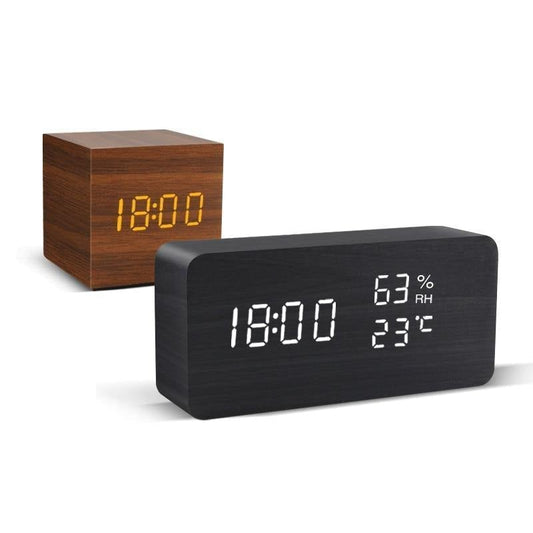
Wood Effect LED Alarm Clock, Cube or Rectangle
Regular price From $31.95 USDRegular price -
Vintage Telephone Shaped Alarm Clock, Three Finishes
Regular price $39.00 USDRegular price -
Black Cut-Out Kitchen Wall Clock, Vinyl Record Style
Regular price $39.00 USDRegular price -
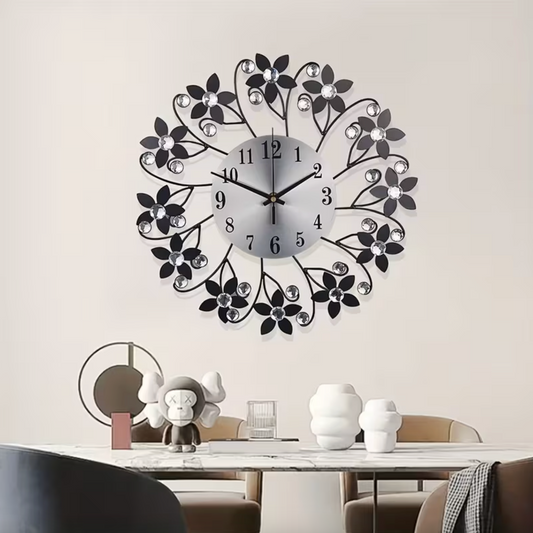
Floral Metal Wall Clock with Crystal Accents
Regular price $69.00 USDRegular price







The size that matters is the dial, not the frame
Wall clocks are sold on overall diameter, and on a decorative clock most of that diameter is frame. A 24 in (61 cm) clock with a petal or spoke surround can carry a dial of 8 in (20 cm), which is the only part you read. It fills the wall like a large clock and tells the time like a small one.
So take two numbers off any listing: the outside diameter, which decides whether it fits the wall, and the dial or numeral height, which decides whether you can read it from the couch. If the second number is missing, measure it off the photo in proportion to the first. A rough guide that holds up: numerals about 1 in (2.5 cm) tall are comfortable to read from around 15 ft (4.5 m), and every extra inch of numeral buys you roughly another 15 ft.
Contrast does as much work as size. Black hands on white read at twice the distance of gold hands on a silver dial, and a mirrored or brushed metal face throws light back at you from across the room, which is why so many handsome clocks turn out to be unreadable at the exact moment you want the time.

What size goes on which wall
Clocks get bought too small far more often than too large, because a 12 in clock looks substantial in your hands and disappears on a wall 10 ft away. Work from the wall and the viewing distance rather than from the object.
| Where it goes | Overall diameter | Read comfortably from |
|---|---|---|
| Kitchen wall, hallway, home office | 10 to 14 in (25 to 36 cm) | Up to about 15 ft (4.5 m) |
| Above a couch or a sideboard | 18 to 24 in (46 to 61 cm) | Across a normal living room |
| A large open plan wall, or above a mantel | 24 to 32 in (61 to 81 cm) | The far end of an open room |
| Double height wall or stairwell | 30 in (76 cm) and up | From the floor above |
| Bedside table or desk | 3 to 6 in (8 to 15 cm) tall | Arm's length, in the dark |
How high, and where not to put it
Hung on its own, a wall clock sits with its center between 60 and 72 in (152 and 183 cm) off the floor, which is eye level to slightly above for most people. Above furniture, forget the floor measurement and work off the furniture instead: leave 8 to 12 in (20 to 30 cm) of clear wall between the top of the piece and the bottom of the clock, and keep the clock no wider than about two thirds of the furniture below it.
Above a door frame is a common placement and a poor one for a clock you rely on. It sits above the natural line of sight, so you look up at a sharp angle and the hands foreshorten, and it is also the piece of wall that takes the most vibration every time the door shuts. It works for a clock that is mostly decoration, in a hallway you pass through.
Three other spots to avoid. Directly opposite a window, because the glass or the metal face will mirror the daylight back at you for half the day. Over a radiator or a heat vent, since warm air rising past a movement dries the lubricant faster. And on a thin partition wall shared with the head of a bed, where the wall itself amplifies every tick into the room next door.
What is behind the dial
The case is decoration around a movement roughly the size of a matchbox, and the movement decides the two things you will live with: the noise it makes and how often you change the battery. It is worth knowing which one you are buying, since the listing photo shows none of it.
| Movement | What it sounds like | Second hand | Battery |
|---|---|---|---|
| Standard quartz step | A click once a second, audible in a quiet room | Jumps between marks | One AA, about a year |
| Continuous sweep | A faint hum instead of a tick | Glides without stopping | One AA, a little shorter, the motor never rests |
| Sweep sold as silent | Quieter, not silent, and still audible at 2 ft in a still room | Glides | Similar to sweep |
| Pendulum, battery driven | Tick plus the swing of the bob | Often none | Needs to hang level or the swing dies |
| LED or digital display | Nothing | None | USB power, with cells only as backup |
Why a clock suddenly ticks louder
A tick that was fine for two years and is now unbearable is usually the movement drying out. The plastic bushings that carry the gear train lose their lubricant, the escapement hits harder, and the click gets sharper rather than louder in raw volume. Warm dry air speeds this up, which is why it tends to show up in the first weeks of the heating season.
The wall is the other half of the problem. A clock screwed flat against a hollow stud cavity turns the wall into a soundboard. Stick two adhesive felt pads to the back of the case so it stands a couple of millimeters off the plaster, and a surprising amount of the noise goes away. A folded cloth pressed into the empty back of the case, clear of the movement itself, absorbs more.
The permanent fix is to change the movement rather than the clock. A replacement sweep movement costs about $10 and takes ten minutes with no tools beyond a pair of pliers. The one measurement to get right is the shaft length, which has to match the thickness of the dial plus any spacer, or the hands will not clear the face.
Digital faces after dark
A bedside display is a light source pointed at you for eight hours, and most of them arrive at a brightness meant for a shop shelf. Look for three or more brightness levels rather than two, and for a display that goes fully dark until you clap, tap or touch it. Sound activated displays sound like a gimmick and are the single most useful feature on a bedside clock, because dark is a setting the others do not offer.
Color matters at night too. White and blue LEDs read crisply in daylight and stay in your vision in a dark room. Amber and red are dimmer to look at and much easier to sleep beside, which is the tradeoff every bedside clock makes on your behalf.
Two details people find out afterward. Most wooden and cube LED clocks run from a USB cable, and the batteries are there only to hold the time when the cable is unplugged, so a mains outage means a clock you have to set again. And nearly all of them ship in 24 hour mode with 12 hour mode hidden behind a button held down for three seconds.

When it runs slow, or stops
Start with the battery, and not with whether it is new. A quartz movement stalls somewhere around 1.2 to 1.3 volts, and a cell reads as fine in a remote control long after it has stopped being able to drive a clock. The zinc carbon battery included in the box is usually the first thing to go, and a rechargeable NiMH cell can be too weak from the start since it puts out 1.2 volts when full.
Next, look at the hands. A minute hand that touches the hour hand at the top of the hour drags and loses a few minutes a day, and one bent a fraction toward the glass catches at the same place every rotation. Ease them apart with a fingertip so they sit in separate planes, and set the clock so the hands pass 12 without brushing.
After that it is dust and wear. Hair and grit work into an open back and bind the gear train, and a movement that has run for eight years has simply run out. On a battery pendulum clock, check level with a phone before anything else, since a case hanging a degree off vertical shortens the swing until the bob stops within a day.
The clock instead of the phone, and the clock as a gift
The argument for a real alarm clock has nothing to do with the alarm, which a phone does perfectly well. It is that the alarm is the reason the phone is on the nightstand at all, and a clock costing twelve dollars lets it charge in the hall instead. That is the whole gain, and it is a real one.
As a gift, a clock carries a meaning worth knowing about first. In Chinese, giving a clock sounds close to the phrase for attending a funeral, so a clock is avoided as a present in Chinese and several other East Asian households. In much of Europe and North America a clock reads instead as a housewarming piece for a wall that has nothing on it yet. Know which house you are giving it to.
For a housewarming, the pick is the one that suits a wall nobody has decided about yet: a plain dial, a size that fits above a sideboard rather than a specific alcove, and a movement that does not tick loudly enough to be someone else's problem.
Common questions
What is the proper height for a wall clock?
On a bare wall, hang it with the center between 60 and 72 inches (152 and 183 cm) off the floor, which puts the dial at eye level or a little above. Above furniture, work from the furniture instead of the floor: 8 to 12 inches (20 to 30 cm) of clear wall between the top of the piece and the bottom of the clock. Keep the clock no wider than about two thirds of the furniture below it, or it starts to look like it is sitting on the piece.
Where not to place a wall clock?
Directly opposite a window, where daylight bounces off the glass or the metal face and makes the hands unreadable for half the day. Above a radiator or a heat vent, since rising warm air dries out the movement faster. And on a thin partition wall shared with a bed head, because the wall amplifies the tick straight into the room on the other side.
Is it okay to put a wall clock above the door?
It is fine for a clock that is mostly decoration in a hallway, and poor for one you check often. It sits above your natural line of sight, so you read the hands at an angle that foreshortens them, and a door frame takes a knock every time the door shuts. If you do hang one there, use a large clear dial and secure it properly to the wall rather than to the frame.
How can I make my wall clock quieter?
Stick two adhesive felt pads to the back of the case so it stands slightly off the wall, which stops a hollow stud cavity acting as a soundboard. Press a folded cloth into the empty part of the case behind the dial, keeping it clear of the movement. If it still bothers you, swap in a continuous sweep movement, which runs about ten dollars and takes ten minutes, matching the shaft length to the thickness of your dial.
Why is my clock ticking so loud all of a sudden?
Nearly always a movement drying out. The plastic bushings lose their lubricant, the escapement strikes harder, and the tick turns sharp rather than louder. It shows up most in the first weeks of the heating season, when the air in the room gets dry. Once it starts, the movement is on its way out, so treat felt pads and padding as a delay rather than a repair.
Why is my clock running slow even with a new battery?
Check what kind of new. A quartz movement stalls at around 1.2 to 1.3 volts, so a rechargeable cell that puts out 1.2 volts at full charge can be too weak from the start, and the zinc carbon battery packed in the box drains quickly. If a fresh alkaline does not fix it, look at the hands: a minute hand brushing the hour hand or catching the glass at the same point each rotation loses several minutes a day.
Is a clock a good housewarming gift?
In most of Europe and North America, yes, and it suits a new home well because a blank wall is exactly what a new home has. Be aware of one exception: in Chinese, giving a clock sounds close to the phrase for attending a funeral, so it is avoided as a gift in Chinese and several other East Asian households. If you are giving one, choose a plain readable dial and a quiet movement, since the recipient has to live with both.
