
Collection: Pets
Objects for the animal that already lives here and has opinions about where. Beds, bowls, grooming tools and a few things aimed squarely at the owner. Dimensions are on every page, because pet products photograph larger than they arrive.

-
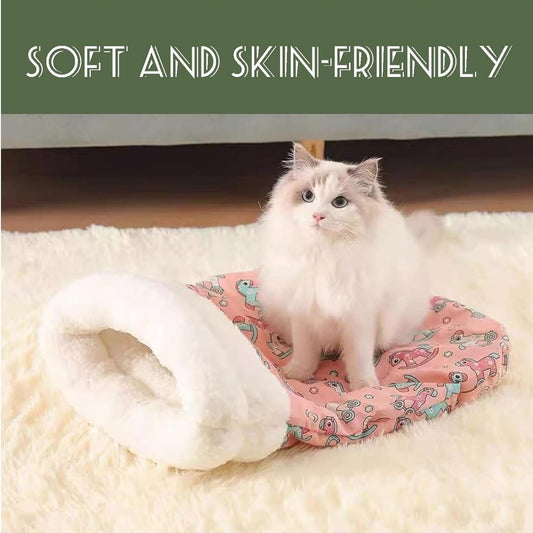
Plush Cat Sleeping Pouch Bed for Small Pets
Regular price $29.00 USDRegular price -
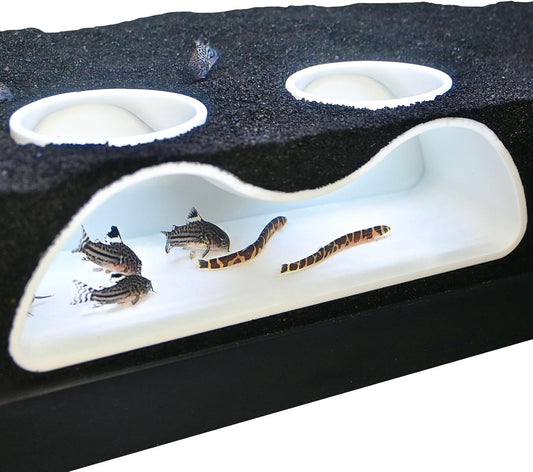
Aquarium Tunnel Hideout for Bottom Dwellers, Curved
Regular price $39.00 USDRegular price -
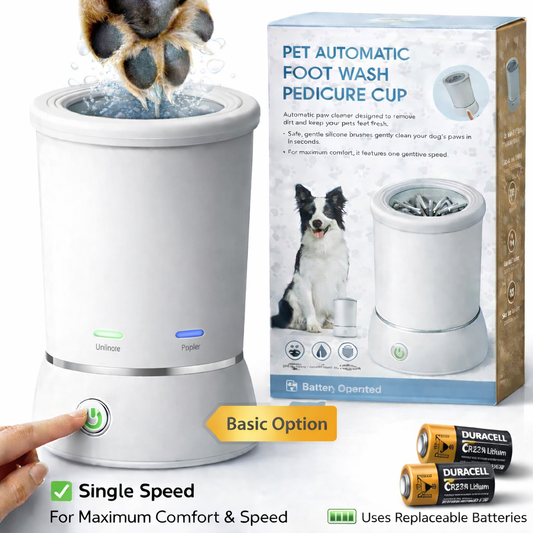
Electric Paw Cleaner Cup with Silicone Bristles
Regular price From $34.00 USDRegular price -
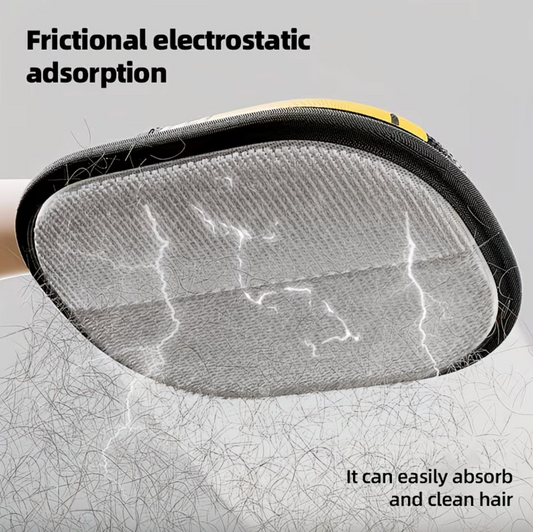
Reusable Silicone Pet Hair Removal Glove
Regular price From $29.00 USDRegular price -
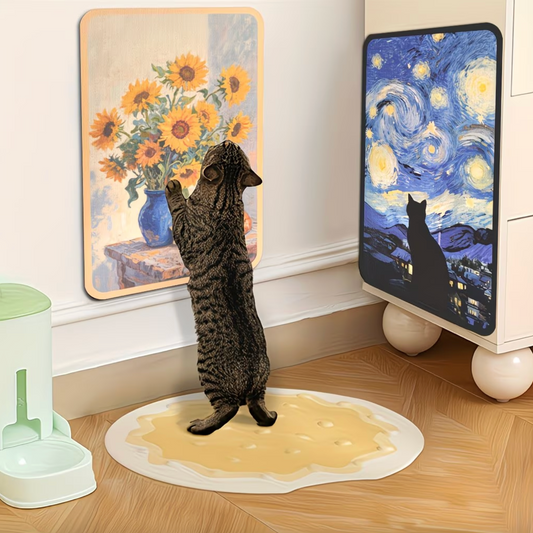
Adhesive Cat Scratching Board with Art Print
Regular price $39.00 USDRegular price -
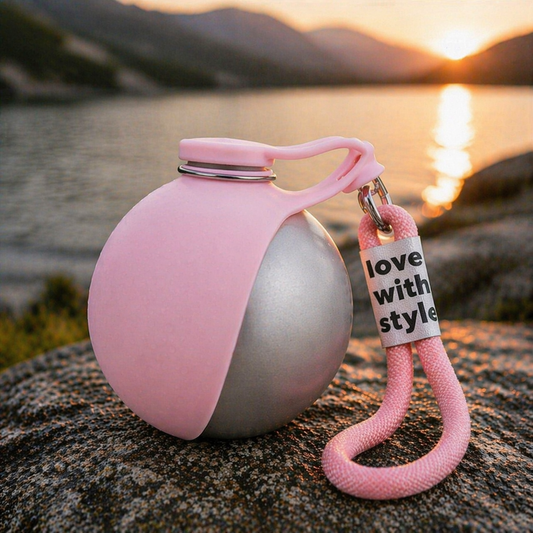
Portable Dog Water Bottle with Fold Out Bowl
Regular price $39.95 USDRegular price -
Calming Ear Wrap for Dogs with Adjustable Chin Strap
Regular price $29.95 USDRegular price








Measure the animal, not the photo
Every returned pet product starts the same way. The photo showed a cat that fit, and the cat in the photo was not your cat. Listing photos are shot with whichever animal made the shape look right, so a pouch that swallows a 7 lb (3 kg) kitten leaves a 14 lb (6 kg) tom with his back half hanging out of it.
There is no shared sizing language across pet goods either. Small, medium and large mean whatever the maker decided, and they shift between a bed, a harness and a hood on the same page. The only number that survives that is one you took yourself, off your own animal, with a soft tape or a piece of string you then hold against a ruler.
Take the measurement before you shop and compare it against the inches and centimeters in the listing rather than the word. If a listing gives no dimensions at all, that is your answer.
What to measure, item by item
Each kind of object has one measurement that decides everything and several that do not matter. These are the ones that decide.

| What you are buying | The measurement that decides | How to take it |
|---|---|---|
| Cat bed or sleeping pouch | The circle a sleeping cat makes | Wait until she is asleep and curled, measure across the circle, then add 4 in (10 cm) |
| Enclosed cave, bag or tunnel | Shoulder height and body length | The animal should turn around inside without pressing the roof with its back |
| Scratching board | Full stretch, front claws to back feet | Measure the cat while it stretches up your couch arm, then buy longer than that |
| Paw cleaning cup | Paw width across the widest pad, fur included | Press a damp paw onto paper and measure the print, not the leg |
| Ear wrap or head hood | Head circumference behind the ears | Soft tape, snug enough to stay put and loose enough to slide two fingers under |
| Portable water bottle | Body weight, converted to fluid ounces | About 1 oz per pound per day as a rough figure, and carry a third of that for a long walk |
Where a cat will actually sleep
Cats do not pick beds, they pick spots, and then they accept whatever is in the spot. That is the whole reason a $60 bed sits empty next to a cardboard box. Before buying anything, watch for a week and note the three places she already sleeps. Those places share features you can then shop for: height off the floor, a wall or a piece of furniture at her back, sun for part of the day, and a view of the door.
On soft against firm, the answer is usually both at once. A cat wants a soft surface to lie on and a firm edge to press against, which is why a bolstered bed with a raised rim gets used and a flat mat gets walked over. A donut or a pouch with sides does this by design. A slab of memory foam with no lip does not.
Enclosed beds, caves and pouches work for cats that already sleep under things: beneath the bed, inside a wardrobe, behind the couch. A cat that sleeps on top of things in the open will treat a cave as a piece of furniture and sit on its roof. Watch first, then buy, and put the new bed exactly where the old spot was rather than where you would like it to be.
Why a scratcher gets used or ignored
Three things decide it: texture, angle and location. Get the location wrong and the other two do not matter, because a scratcher on the far side of the room is not competing with the couch arm your cat has already chosen. Put the new one directly in front of the damaged spot for the first two weeks, then move it a few inches a week if you want it somewhere else.
Angle matters more than people expect. A cat that shreds a rug scratches horizontally and will ignore a tall post; a cat that reaches up the door frame scratches vertically and will ignore a flat board. Watch which one yours does, then buy that shape. A scratcher also has to be longer than the full stretch of the cat and heavy or fixed enough not to slide, since one skid across the floor is usually enough to retire it.
| Surface | Under a claw | Mess | How long it lasts |
|---|---|---|---|
| Corrugated cardboard | Shreds satisfyingly, most cats take to it fastest | Confetti, daily, around the base | Weeks to months, flip it over to double that |
| Sisal rope | Tough, resists, good for a cat that pulls hard | Little, some loose fiber | Longest of the three |
| Sisal fabric or woven mat | Catches claws without unraveling into rope | Minimal | Long, and it stays flat on a wall or a board |
| Carpet | Familiar, which is the problem | Low | Long, but it teaches that carpet is fair game |
| Wood or bare board | Firm, for cats that scratch tree bark outdoors | None | Longest, and the least likely to be used indoors |
Hair is the daily tax
A lint roller lifts what is sitting on top of the fabric. It does nothing about the hair that has worked its way into a weave, and on a boucle or a chenille couch it is close to useless. What pulls embedded hair out is friction plus a little static: a rubber or silicone glove, a mesh pad, or a plain kitchen glove dampened and dragged in one direction. The hair rolls up into a rope you can pick off in one piece.
One direction is the part people skip. Back and forth pushes hair deeper into the weave and works it around the fibers. Always pull toward yourself, lift, and start again from the same edge. On woven upholstery, do a pass with a barely damp glove and a second dry pass once it has dried, since the damp pass raises what is embedded and the dry pass collects it.
The rest is fabric choice. Tight flat weaves in a mid tone hide and release hair; loose loops and velvet hold onto it. If your animal has a favorite cushion, give it a washable cover and wash that cover in cold water with no fabric softener, because softener leaves a coating that makes fabric hold hair rather than shed it.

Water away from the house
The number repeated most often is roughly one fluid ounce of water per pound of body weight per day, so about 50 oz (1.5 L) for a 50 lb dog. Treat that as a rough figure rather than a rule, since heat, effort and food all move it, and your vet's number for your dog beats any figure on a shopping page. For a walk you are carrying a fraction of the daily total: 10 to 12 oz (300 to 350 ml) covers most hour long walks, and a hike in summer wants double that.
Bottle design matters more than capacity. The useful ones have a trough that folds over the top and a one way channel that returns what the dog does not drink back into the bottle, which is what keeps you from pouring half of it onto the sidewalk. Check that the lock holds with the bottle upside down in a bag, because a leak in a backpack is the reason most of these get abandoned.
Rinse it the day you use it. A film builds on the inside of the trough within a few days of sitting damp with saliva in it, and once it is established you can feel it with a fingertip. Warm water, a drop of dish soap and a bottle brush handles it. Leaving it to dry with the lid open is what stops it coming back.
Paws at the door
The mess that gets tracked in is not on the top of the paw, it is packed between the pads. A towel by the door wipes the outside and leaves the grit, road salt in winter and the wet in the middle, and the wet is what carries the smell into the couch an hour later.
A paw cup works because the silicone bristles reach between the pads. Fill to the marked line with lukewarm water, dip, twist or let it spin for about ten seconds per paw, then dry immediately with a towel worked between each toe. Skipping the drying step undoes the wash, since damp fur between the pads is exactly the condition you were trying to remove.
Empty and rinse the cup after each use rather than at the end of the week. It holds dirty water in a warm closed cylinder, which is a smell in waiting, and a cup that smells is a cup that the dog starts refusing to put a foot in.
You are buying for the household too
Almost everything here is a hollow with an animal in or against it: a pouch, a cave, an aquarium tunnel, a cup for a paw. The animal decides whether it gets used, and you live with the rest of it, which is worth saying out loud before you buy. That bed sits in your living room for the next three years, and a cat is entirely indifferent to whether it matches the couch.
As a gift for someone else's animal, size is the trap. Anything the animal has to fit into or wear needs a measurement you do not have, so give the things that fit any size: a scratching board, a grooming glove, a water bottle, a tunnel for a tank. Save the fitted items for animals you have measured yourself.
And accept the ratio. A good share of what you buy for an animal gets ignored whatever it cost, so favor the things you would still want in the room if that happens, and keep the receipt on the rest.
Common questions
How do I choose the right cat bed for my cat?
Start from where she already sleeps, since cats pick spots rather than beds. Note the height off the floor, whether her back is against something, and how much sun the place gets, then buy something that fits into that spot. For size, measure the circle she makes when curled and add about 4 inches (10 cm). Put the new bed exactly where the old sleeping place was, not where it looks best.
Do cats prefer hard or soft beds?
Most want both at once: a soft surface underneath and a firm edge to press against. That is why bolstered beds with a raised rim get used while flat mats get walked across. A cat pressing its spine into a rim is doing the same thing it does when it sleeps against the back of the couch. Very soft with no structure gives it nothing to lean on.
Do cats prefer circle or square beds?
Neither shape wins on its own, and what actually matters is the sides. A round donut suits a cat that sleeps curled nose to tail; a square or rectangular bed suits one that sleeps stretched out on its side, and stretchers need the longer inside measurement. Watch which way yours sleeps for a week before choosing, because the two shapes fail each other's sleeper.
How to choose a dog water bottle?
Work from the walk rather than the dog. Ten to twelve ounces (300 to 350 ml) covers most hour long outings, and a summer hike wants double. Then check three details: a trough that folds flat, a return channel that sends unused water back into the bottle instead of onto the sidewalk, and a lock that holds when the bottle is upside down in a bag. Anything wider than about 3 inches (8 cm) stops fitting in a side pocket.
How many fl oz of water for a dog in a day?
The figure quoted most often is around one fluid ounce per pound of body weight per day, so roughly 50 oz for a 50 lb dog and 25 oz for a 25 lb one. It is a rough guide rather than a target to hit, and heat, exercise and wet food all shift it. Your vet's number for your particular dog is the one to follow.
How do you get dog hair off a couch without a lint roller?
Use friction instead of adhesive. A rubber or silicone glove, a mesh grooming pad, or an ordinary kitchen glove dampened slightly and dragged in one direction will roll embedded hair into a rope you can lift off in one piece. Pull toward yourself, lift, and start again from the same edge, since back and forth strokes push hair deeper into the weave. Vacuum afterward to pick up what the pass loosened.
Why won't my cat use the scratching post I bought?
Usually the location, then the angle, then the surface. A post across the room does not compete with the couch arm she has already chosen, so put the new one right in front of the damaged spot for a couple of weeks. Check the angle too: a cat that shreds rugs scratches horizontally and will ignore a vertical post. It also has to be longer than her full stretch and steady enough not to slide, because one skid is usually enough for her to give up on it.
