
Collection: Candle Holders
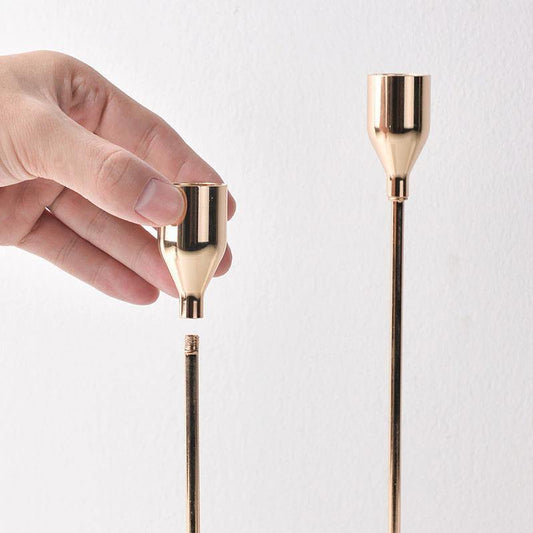
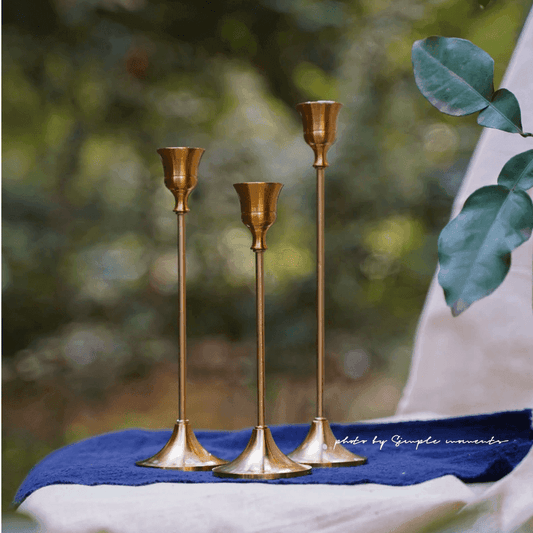
A taper holder is bought for its height, not its base. Three at the same height read as an accident; three that step down read as a group. Check the socket against the candle you actually burn, because a loose taper leans, and a leaning taper drips.

-
Wooden Taper Candle Holders, Short and Tall
Regular price $19.97 USDRegular price -
Blue Glass Taper Candle Holder in Seven Shapes
Regular price From $31.97 USDRegular price -
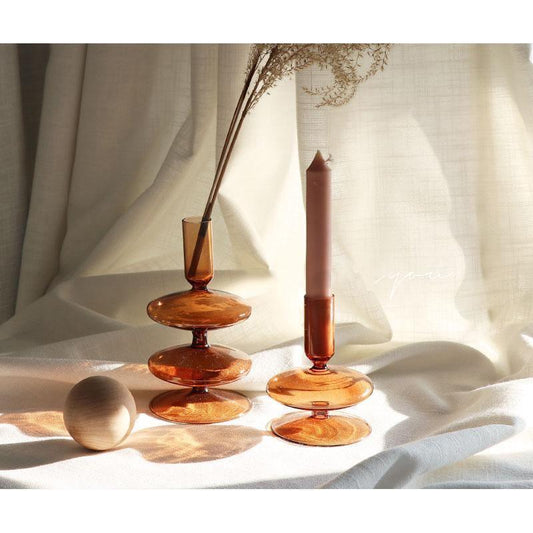
Brown Borosilicate Glass Taper Candle Holders
Regular price From $36.97 USDRegular price -
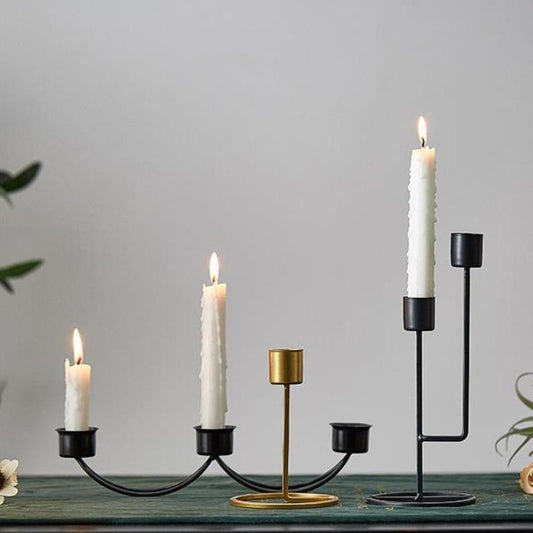
Metal Taper Candle Holders and 2 or 3 Arm Candelabras
Regular price From $25.95 USDRegular price -
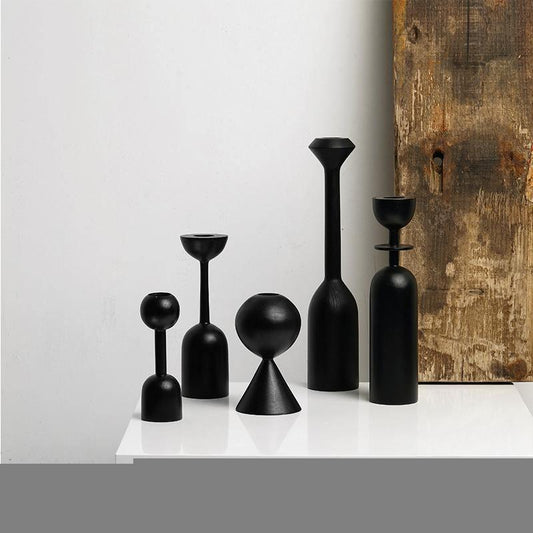
Black Wood Taper Candle Holders, Five Shapes
Regular price From $39.97 USDRegular price -
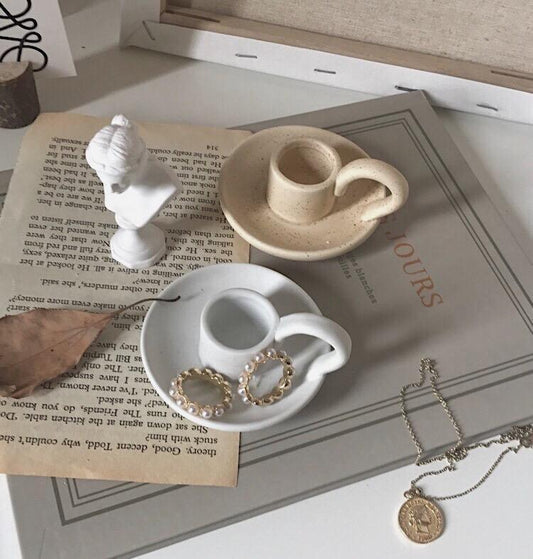
Handmade Ceramic Taper Candle Holder with Handle
Regular price $25.97 USDRegular price -
Gold Taper Candle Holders, Set of 3
Regular price $35.97 USDRegular price -
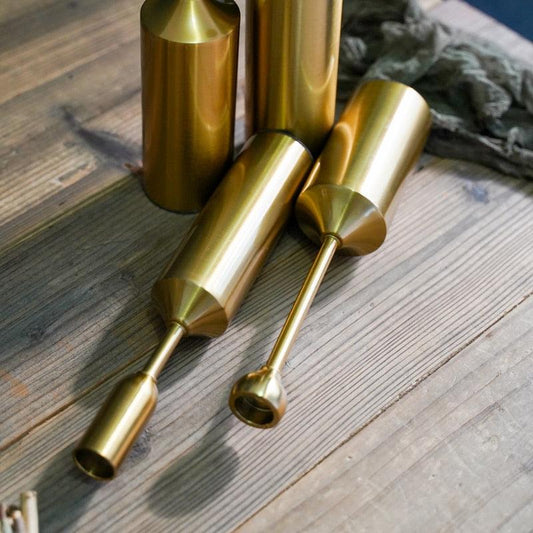
Gold Candle Holders in Six Heights, Singles or Sets
Regular price From $34.97 USDRegular price -
Bronze Metal Taper Candle Holders, Set of Three
Regular price $69.97 USDRegular price -
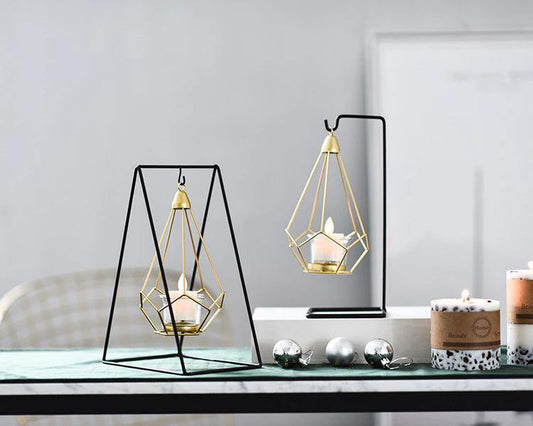
Geometric Iron Hanging Lantern for Tea Lights
Regular price From $39.97 USDRegular price -
Reclaimed Wood Tealight Candle Holder with Glass Cup
Regular price $27.95 USDRegular price -
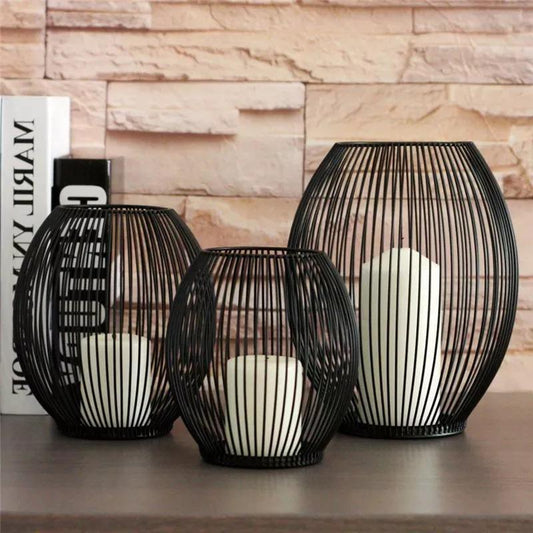
Black Wire Cage Candle Lantern, Three Sizes
Regular price From $28.97 USDRegular price -
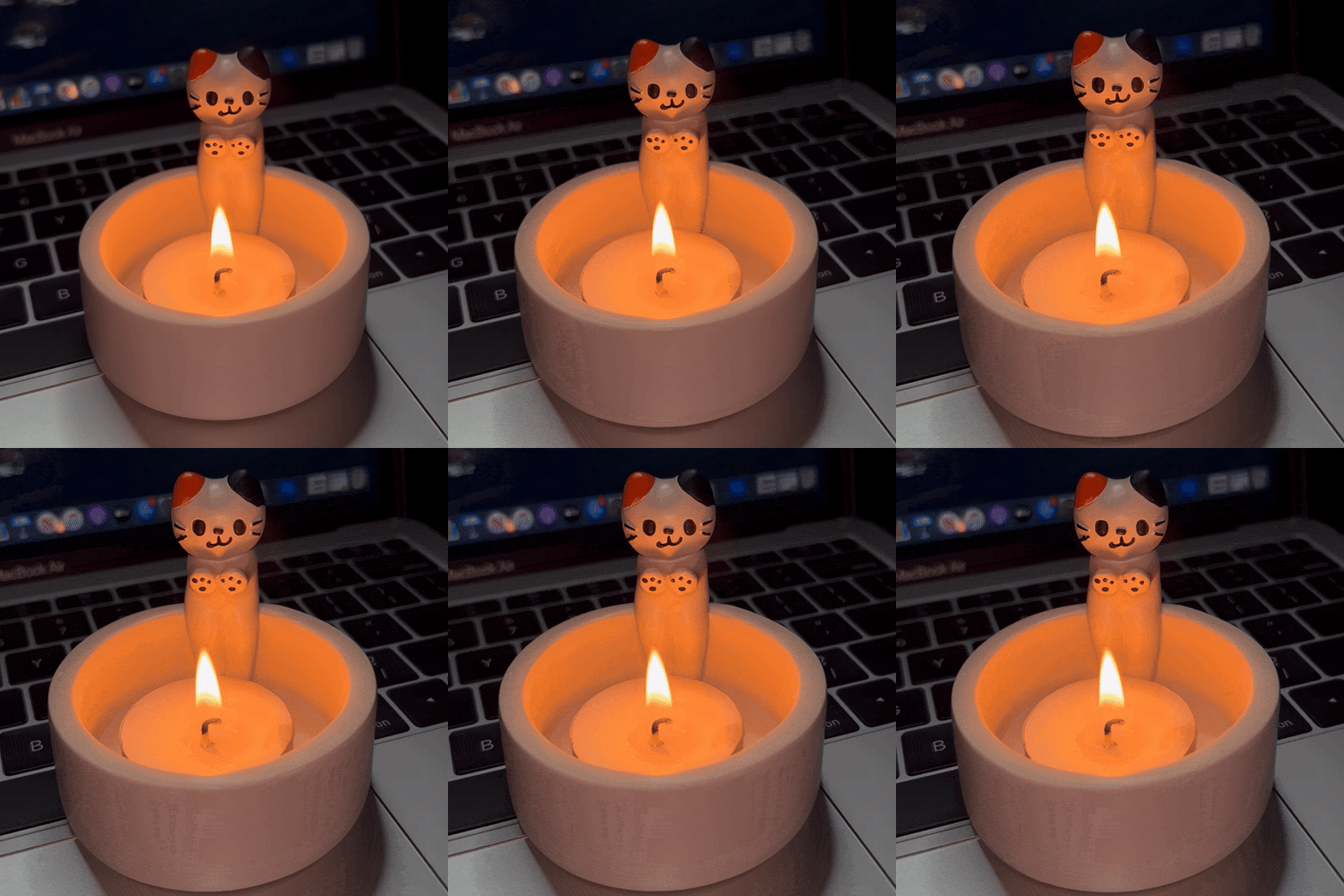
Kitten Candle Holder in White, Color or a Pair
Regular price From $19.95 USDRegular price -
LED Floating Candles with Wand Remote, Hanging Set
Regular price From $39.00 USDRegular price -
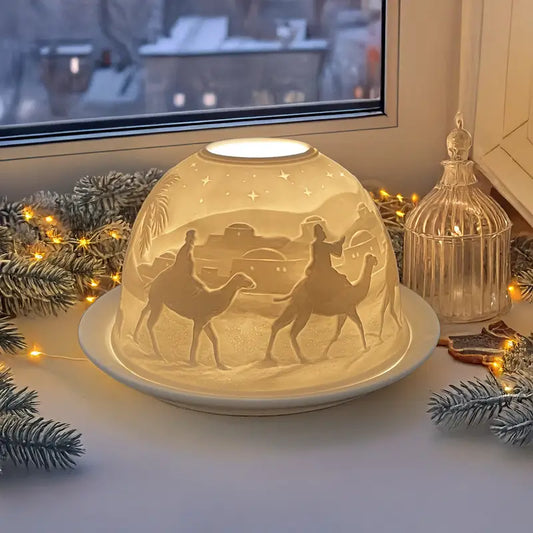
Carved Porcelain Dome Candle Holder with Relief Scene
Regular price $39.00 USDRegular price



















The candle you burn decides the holder
Almost every candle holder problem starts as a candle problem. A 7/8 in (22 mm) taper dropped into a 1 in (25 mm) socket leans, and a leaning taper burns down one side and drips. A 3 in (7.6 cm) pillar on a plate sized for a votive overhangs the rim, and the wax runs onto the table instead of pooling where it should.
So settle the candle first. Decide whether you burn tapers at dinner, pillars on a mantel through winter, or tealights by the dozen when people come over, then buy for that candle. The other order is how you end up with three good candlesticks and a drawer of candles that fit none of them.
Candle types and what holds each one
The names get used loosely and the same wax cylinder is sold under two of them. What matters is the diameter at the base and whether the wax stays solid or goes fully liquid while it burns.
| Candle | Typical size | Burn time | What holds it |
|---|---|---|---|
| Taper | 7/8 in (22 mm) base, 10 to 18 in tall, tapering to the tip | Roughly one hour per inch | A socket candlestick or a candelabra |
| Dinner candle | Same 7/8 in base, straight sides top to bottom | A little longer than a taper of equal height | The same sockets, and it sits more upright |
| Pillar | 2 to 4 in (5 to 10 cm) wide, 3 to 9 in tall | About 4 to 5 hours per inch of height | A flat plate, a tray, or a hurricane |
| Votive | 1.5 in (3.8 cm) wide, 2 to 2.5 in tall | 10 to 15 hours | A snug cup, because it liquefies completely |
| Tealight | 1.5 in wide, in its own metal cup | 4 to 6 hours | Anything with a 1.5 in recess |
| Floating | 2 to 3 in wide disk | 4 to 8 hours | A bowl holding at least 2 in of water |
The socket is 7/8 in and your candle probably is not
The standard taper base in the US measures 7/8 in (22 mm). Sockets are not standardized at all. A turned wood candlestick is often bored at 3/4 in (19 mm), a cast brass cup runs closer to 1 in (25 mm), and a hand thrown ceramic one is whatever the potter felt like. Measure the socket before you buy the candles, or accept that half of them will need work.
Too tight is the easy failure. Hold the bottom inch of the candle in hot tap water for fifteen seconds and press it down, and the softened wax takes the shape of the cup. If it still will not seat, shave the base with a vegetable peeler, turning the candle as you go so it stays round.
Too loose is the failure that costs you a tablecloth, and there are three fixes in order of how long they hold. Wrap the bottom inch in masking tape until it grips, which takes ten seconds and stays hidden. Press a pea of candle adhesive into the base of the socket. Or drip melted wax from the same candle into the cup, push the taper in, and hold it thirty seconds while it sets. The last one holds best and comes out later with the rest of the wax.

How many, and how tall
Odd numbers, stepped heights. Three candlesticks at the same height read as a set that lost a member. Three that step down by 2 in (5 cm) or more read as a group, because the eye follows the descent instead of counting.
A dining table adds a constraint that has nothing to do with looks. The table sits 30 in (76 cm) off the floor and the eye line of a seated adult lands around 42 in (107 cm), so a flame standing 12 to 18 in above the table is exactly where the person opposite is trying to look. Keep the whole thing under 12 in (30 cm), or go past 18 in (46 cm). The middle is the only wrong answer.
Leave at least 3 in (7.6 cm) between two burning candles. Any closer and each one warms the other, both burn faster and crooked, and within the hour they are leaning apart like a bad photograph.

Brass, iron, wood, glass, ceramic
The material decides how hot the holder gets, how the wax comes off, and whether it stays upright when somebody knocks the table.
| Material | Heat | Getting wax off | Stability | Watch for |
|---|---|---|---|---|
| Brass | The cup gets hot, the stem stays cool | Hot water lifts the plug in one piece | Heavy for its size | Dry it at once, standing water spots the finish |
| Iron | Slow to heat, holds it a long time | Chips off cold with a fingernail | The steadiest of the five | Rust in a bathroom or outdoors |
| Wood | Does not conduct, but it scorches | Scrape cold, wipe warm, never soak | Light and often top heavy | Never let a candle burn down to the wood |
| Glass | The wall beside the flame gets hot | Freezer, then tip the wax out | Light, tips easily once tall | Cracks if the flame sits against the side |
| Ceramic | Glazed ceramic takes heat well | Freezer or hot water, both work | Heavy base, stays put | Unglazed clay drinks wax and stains for good |
Getting dried wax out without scratching anything
Put the knife down. A blade takes the wax off and takes the lacquer off brass with it, and on glass it leaves scratches that catch the light forever after. Wax does not need force, it needs a change of temperature.
Cold first. An hour in the freezer and the wax contracts faster than the metal, glass or glazed ceramic around it, so the plug cracks loose and drops out when you turn the holder over. Lift the last flakes with a fingernail or a wood skewer. Heat second, for anything you cannot chill: run hot tap water over the outside of the cup until the plug softens, push it out, and wipe while the piece is still warm, because cold wax smears and warm wax wipes.
Two exceptions. Wood goes in neither the freezer nor the sink, since it takes on water and the joint between base and stem opens up. And melted wax never goes down the drain, because it sets again about 2 ft (60 cm) along the pipe from where you poured it.
The numbers that keep it a candle and not a fire
Twelve inches (30 cm) is the number worth remembering: the clearance between a burning candle and anything that can catch, meaning curtains, a bookshelf, dried stems, the paper napkin somebody folded into a fan. Most candle fires start with something that got moved next to a flame after the flame was lit.
Trim the wick to 1/4 in (6 mm) before every lighting, since a long wick makes a tall flame and a tall flame is what smokes and blackens glass. Burn for no more than four hours at a stretch, then put it out and let it cool for two. Stop a taper while 2 in (5 cm) is left above the socket, and stop a container candle while the wax is 1/2 in (13 mm) from the bottom.
Wood deserves its own line. A wood holder is fine under a taper you extinguish with 2 in left, and it is a genuine hazard under a pillar you let run down to the base. Burn pillars on wood only with a metal plate or a glass insert between the wax and the grain. A hurricane sleeve does not cancel that rule either. It stops the draft, nothing more, and it wants about 1 in (2.5 cm) of air all around the flame or the glass gets hot enough to crack.
What a candlestick is actually holding
Look at any candlestick and the part doing the work is the part that is not there: a hole about the width of your thumb, cut half an inch deep. Everything below it is a stand for that hole. A candelabra is the same hole five times over, spaced far enough apart that the flames do not cook each other.
Which is why the socket earns more of your attention than the finish. A beautiful holder with a sloppy bore holds a leaning candle, and a leaning candle drips on the table whatever the base is made of. Check the hole. The rest is decoration, and decoration is the easy part.
Common questions
What can I use to hold a candle in place?
Candle adhesive, sold as sticky wax, is the purpose made answer: a pea sized piece pressed into the base of the socket grips a taper that rattles. Melted wax from the same candle does the same job for nothing. Drip a little into the cup, push the candle in, and hold it thirty seconds while it sets. For a wide gap, wrap the bottom inch of the candle in masking tape until it grips, since nothing shows once the candle is seated.
How to make taper candles stay straight in holder?
A taper leans because the socket is wider than its base, so close the gap rather than propping the candle. Warm the bottom inch in hot tap water for about fifteen seconds and press it firmly into the cup, and the softened wax takes the shape of the socket. If it still moves, add candle adhesive or a wrap of masking tape under the wax. Check it again after an hour of burning, since heat travels down the wax and a candle that stood straight when cold can settle.
Are taper candles supposed to drip?
Standard paraffin tapers drip, and that is normal. Dripless tapers work by burning the wax pool down faster than it can run over the edge, which only holds while the candle stands upright and out of moving air. Tilt one a few degrees, or set it near an open window or a vent, and it drips like any other. Beeswax tapers drip more than paraffin as a rule, so put a plate or a bobeche under them.
What is considered a votive candle?
A votive is a small candle about 1.5 in (3.8 cm) across and 2 to 2.5 in tall that burns for 10 to 15 hours. What separates it from a tealight is the container: a tealight arrives in its own metal cup, a votive does not. A votive goes fully liquid as it burns, so it needs a snug glazed or glass holder close to its own diameter. Set one on an open plate and you get a spread of wax and a wick lying flat in it.
How to get dried wax out of glass candle holders?
Put the holder in the freezer for about an hour. Glass and wax contract at different rates, the plug cracks away from the wall, and it usually falls out when you turn the holder over and tap it. If a film remains, fill it with hot tap water, leave it two minutes, and wipe with a paper towel while the glass is still warm. Never use a knife, because a blade leaves scratches in glass that catch the light for the rest of the life of the piece.
Where not to place candles?
Nothing flammable within 12 in (30 cm), which rules out most window sills with curtains, the shelf directly under a cabinet, and a table dressed with dried stems. Keep candles out of moving air, so not beside an open window, a door in use, or a vent, because a leaning flame drips and smokes. Never where a pet tail passes at flame height, and never on a surface people reach across. And not in a bedroom you fall asleep in, which is where a large share of home candle fires begin.
How to arrange candlesticks on a dining table?
Odd numbers and stepped heights. Three holders differing by at least 2 in (5 cm) read as a group, while three of one height read as an accident. Leave at least 3 in (7.6 cm) between flames so they do not warm each other and burn crooked. And keep the flame either under 12 in above the table or above 18 in, because a flame between those two heights sits in the eye line of the person across from you.
