
Collection: Wall Decor
Wall pieces are the last thing bought and the first thing noticed. Macrame hangings, shelves and hooks that carry weight as well as looks. Anything hung from a single point needs a hook rated for the load and a fixing that is not plasterboard alone.

-
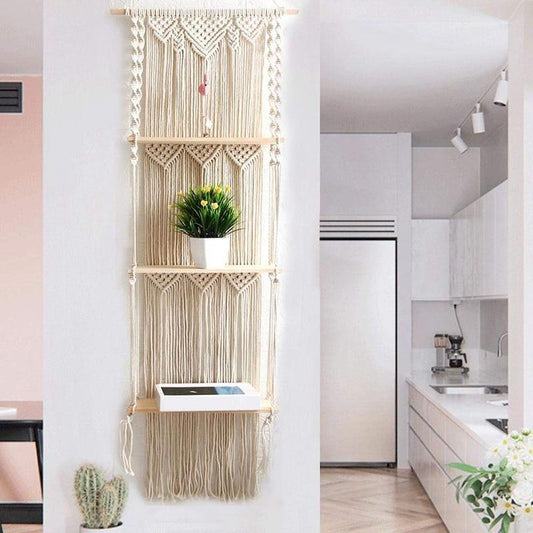
Three-Tier Macrame Hanging Shelf
Regular price $107.97 USDRegular price -
Perched Birds Wall Hook Rack in Cast Resin
Regular price From $59.97 USDRegular price -
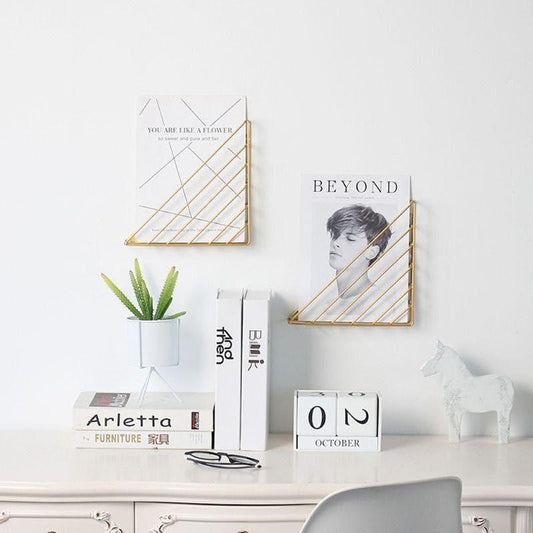
Triangular Metal Wall Rack for Magazines and Files
Regular price From $28.97 USDRegular price -
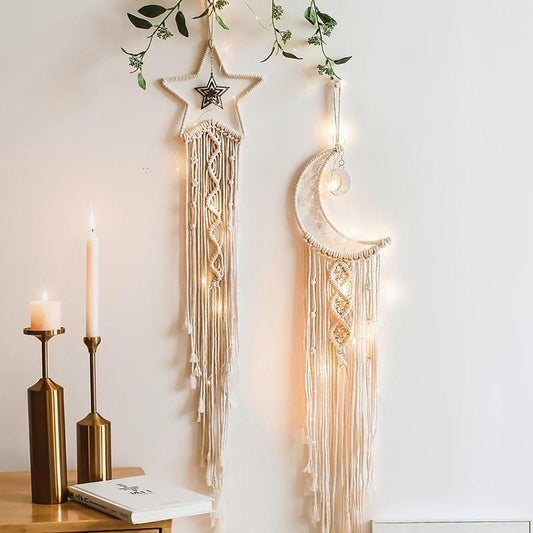
Cotton Macrame Wall Hanging on a Bamboo Peg, Four Styles
Regular price $24.94 USDRegular price -
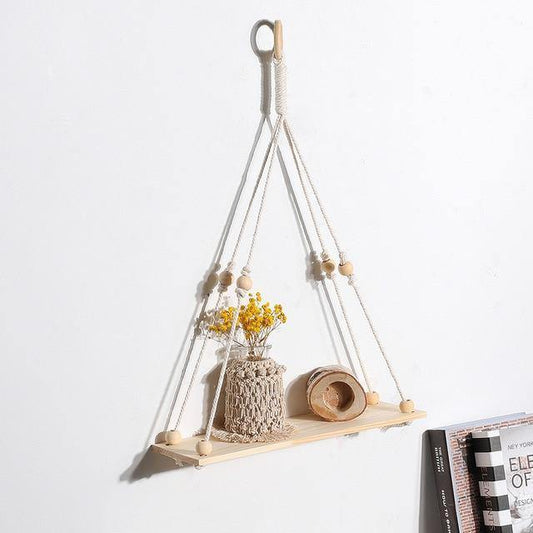
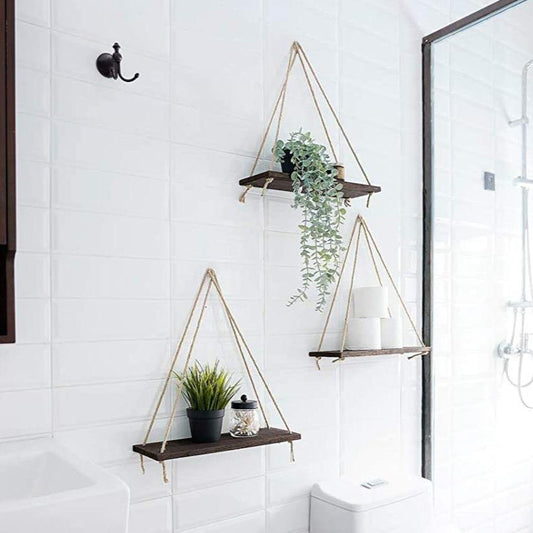
Macrame Rope Hanging Shelf in Recycled Wood
Regular price From $25.97 USDRegular price -
Rope Hung Wooden Wall Shelf, 13.8 in
Regular price $25.97 USDRegular price -
White Wooden Letters, 3.15 in, Stand or Mount
Regular price $19.97 USDRegular price -
Ornate Tabletop Vanity Mirror, Double Sided
Regular price $34.00 USDRegular price -
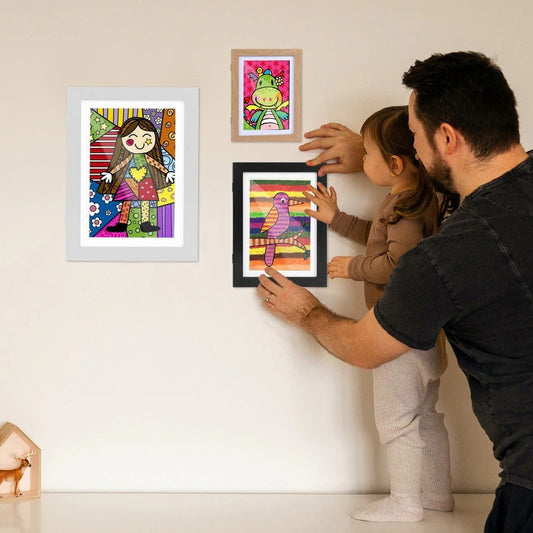
Kids Art Frame for A4 Drawings with Magnetic Front
Regular price $39.00 USDRegular price -
Wooden Ultrasound Photo Frame, Pregnant Silhouette Stand
Regular price $29.00 USDRegular price -
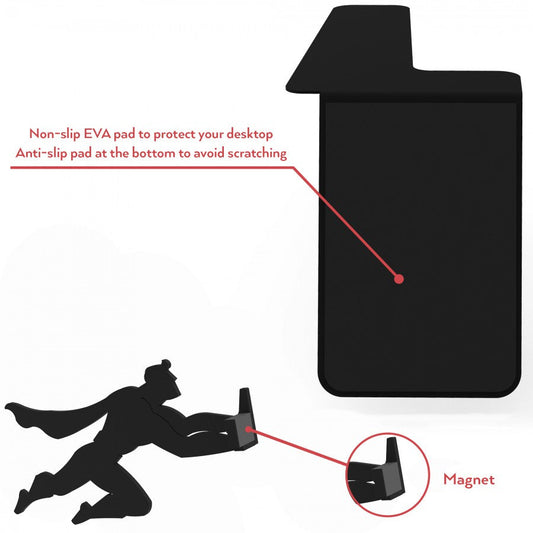
Metal Superhero Floating Bookshelf and Bookend
Regular price $44.97 USDRegular price -
Sheer Embroidered Jacquard Curtain, Floral Motif
Regular price From $39.00 USDRegular price -
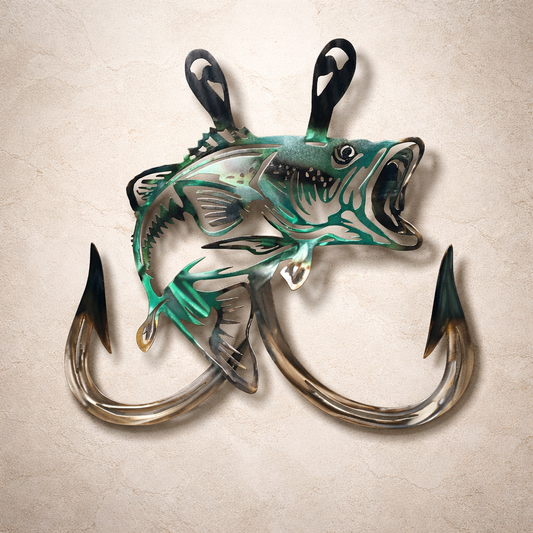
Metal Marine Life Wall Art, Four Ocean Designs
Regular price $49.00 USDRegular price
















A wall piece is a load before it is a picture
Everything on this page hangs off a hole in your wall, and the hole is the part nobody photographs. A 2 lb (0.9 kg) cotton hanging and a 12 lb (5.4 kg) rope shelf carrying two pots are the same object as far as the wall is concerned: a weight pulling down and outward, usually at one point.
The failure looks identical every time. The piece holds for a week, then the anchor works loose and comes out with a cone of white dust and a hole three times wider than the one you drilled. That is not bad luck. Hollow drywall is about 1/2 in (13 mm) of compressed gypsum with paper on each face, and a plain screw driven into it has almost nothing to bite.
So settle two things before you settle on a style: what the wall is made of, and what the finished piece weighs with everything you intend to put on it. Compared with those two answers, choosing the shape is the easy part.
Find out what the wall is made of
Knock on it. A hollow drum sound between the studs means drywall. A dull thud with no give means brick, block or concrete. Older houses give a third answer, a hard brittle surface over thin wood strips, which is plaster over lath and which crumbles if you treat it like drywall.
Studs in most US framing sit 16 in (41 cm) apart measured center to center, and 24 in (61 cm) in some newer construction. If you have no stud finder, measure out from a corner in 16 in steps, or find an outlet box: outlet boxes are nailed to the side of a stud, so there is timber within an inch of one edge.
| Wall | How you recognize it | What to fix with | Rough load per fixing |
|---|---|---|---|
| Drywall, hollow behind | Drum sound, the screw sinks with no resistance | Self drilling threaded anchor, or a toggle bolt | 25 to 50 lb (11 to 23 kg) |
| Drywall with a stud behind | Solid sound, the drill bit meets wood after 1/2 in (13 mm) | A #8 wood screw, 1 1/2 in (38 mm) into the timber | 80 lb (36 kg) and up |
| Plaster over lath | Hard brittle face, gray dust, then wood strips underneath | Pilot hole first, screw into the lath, toggle for anything heavier | 15 to 25 lb (7 to 11 kg) |
| Brick or block | Dull thud, no flex anywhere on the wall | Masonry bit plus a plastic plug or a sleeve anchor | 100 lb (45 kg) and up |
| Concrete | Same dull thud, a normal drill barely marks it | Hammer drill and a masonry sleeve anchor | 100 lb (45 kg) and up |
Anchors, ranked by what they actually hold
Anchor packets print a number measured on fresh drywall with the weight pulling straight down. A shelf holds its load 6 in (15 cm) out from the wall, and that leverage pries the top of the anchor back out of the hole rather than dragging it down. Halve the printed figure and you land close to what the fixing does on your wall.
| Fixing | Holds about | Needs | How it fails |
|---|---|---|---|
| Adhesive strip pair | 1 to 4 lb (0.5 to 1.8 kg) | Flat painted surface, wiped with rubbing alcohol | Lets go in a steamy room, taking a patch of paint |
| Adhesive hook | 3 to 7 lb (1.4 to 3.2 kg) | One hour of cure time before you load it | Peels downward under a slow constant pull |
| Plastic expansion plug | 5 to 10 lb (2.3 to 4.5 kg) | A drilled hole sized to the plug | Spins in the hole, then pulls straight out |
| Self drilling threaded anchor | 25 to 50 lb (11 to 23 kg) | No pre drilling, just a screwdriver | Pulls a disc of gypsum out with it on old board |
| Toggle bolt | 30 to 100 lb (14 to 45 kg) | A hole wider than the bolt, and a hollow cavity | Rarely, but the toggle drops inside the wall if you undo it |
| Wood screw into a stud | 80 lb (36 kg) and up | Finding the stud, which is the whole difficulty | It does not, the shelf breaks first |
One fixing point or two
A framed piece with wire across the back can sit on one hook, because the wire spreads the pull along the frame and the frame does the rest. A rope shelf hanging from a single ring cannot. The board, the cords, everything standing on the board and the shove it gets when somebody reaches past all arrive at one anchor, and that anchor is usually in drywall.
Two fixings set 12 to 16 in (30 to 41 cm) apart cut the load on each one in half and stop the piece rotating when it is knocked. If a hanging arrives with a single loop of cord and it is going on drywall, rest the dowel across two hooks instead of threading the loop over one. It hangs exactly the same and it stops swinging every time a door closes.

Height and width, the two numbers people get wrong
Galleries hang the center of a piece 57 to 60 in (145 to 152 cm) off the floor, which is standing eye level for most adults. Use that on any stretch of empty wall. Almost every piece hung by eye lands 6 in (15 cm) too high, because you hang it standing close to the wall and then look at it from across the room.
Above furniture the floor stops being the reference and the furniture takes over. Leave 6 to 8 in (15 to 20 cm) between the top of a sofa back and the bottom of the piece. Past 10 in (25 cm) the two stop reading as a pair and the piece drifts on its own.
For width, aim to fill about two thirds of the furniture below. An 84 in (213 cm) sofa wants roughly 56 in (142 cm) of wall piece, measured edge to edge across a group with the gaps counted in. Inside a group, gaps of 2 to 3 in (5 to 8 cm) read as one object, and gaps of 6 in (15 cm) read as separate objects sharing a wall.
What a hanging shelf carries, and where
The cord is almost never the weak link. Braided cotton of 4 mm holds far more than the anchor behind it, and a pine board splits before the rope parts. The wall gives up first, every time, so size the fixing to the loaded weight rather than to the shelf.
Weigh what goes on it rather than guessing. A 6 in (15 cm) ceramic pot with a plant in it runs around 4 lb (1.8 kg), and closer to 6 lb (2.7 kg) in the hour after watering. Three hardback books run about 5 lb (2.3 kg). Two pots and a few books is a 15 lb (6.8 kg) shelf, which is past every adhesive hook sold.
Placement on the board matters as much as the total. Keep the heavy things at the ends, directly over the cords, and the light things in the middle. The center of a rope shelf is the point furthest from both supports, which is where a thin board bows and starts tipping its contents toward the floor.

Cotton, wood and metal, and how each one ages on a wall
Natural cotton macrame drifts from cream toward yellow in a south facing window over about two years. That is sun rather than dirt, and washing does not bring the color back. Hang cotton on a wall the sun crosses in passing, not the one it sits on all afternoon.
Fringe collects dust and keeps it. Vacuum with the brush head on the lowest suction, or hold a hair dryer on its cool setting about 12 in (30 cm) away and blow the dust out of the knots. Spot clean marks with cold water and a drop of mild soap worked in with your fingers, then blot dry. A fringed piece does not survive a washing machine: the knots tighten unevenly and it comes back shorter down one side.
Metal splits into two groups, and the label rarely tells you which. Powder coated steel handles a bathroom. Raw or lacquered steel does not, and a cut edge blooms rust over one damp season. Untreated wood shelving cups toward the wall in a humid room, which is how a flat board starts tipping things forward.
The wall pieces that earn their fixing
The things that stay on a wall for years are usually the ones doing a job. A peg rack by the door holds keys, a leash and the bag you carry every day, and it is the only decor in the house that gets touched twice a day. A small shelf beside a bed holds a glass of water and a phone, and it means one less nightstand in a room with no space for one.
That makes the measurements different. A coat peg sits well at 60 to 66 in (152 to 168 cm) off the floor for adults and around 40 in (102 cm) for children, and pegs want 6 in (15 cm) between them or the coats pile into a single lump.
A wall piece that holds nothing has to be worth looking at every single day. A piece that holds something only has to be worth looking at on the days it is empty, which is a far lower bar, and it is why hooks and small shelves outlast the decorative pieces they were bought alongside.
Common questions
What is the 3-5-7 rule in decorating?
Group objects in odd numbers: three, five or seven. An odd group has a natural center and the eye reads it as one arrangement, while an even group splits into pairs and reads as two things. On a wall it applies to clusters of small pieces, where three hangings at different sizes hold together better than four at the same size.
What is the 70/30 rule in decorating?
Give roughly 70 percent of the surface to one dominant treatment and leave 30 percent as contrast or empty space. On a single wall that means the hangings and frames occupy about two thirds of the usable area and the rest stays bare. The bare third is what makes the filled part look deliberate. Walls that feel cluttered are usually closer to 90/10.
How high should you hang wall art above a sofa?
Leave 6 to 8 in (15 to 20 cm) between the top of the sofa back and the bottom of the piece. Past 10 in (25 cm) the two stop reading as a pair. On empty wall with no furniture under it, put the center of the piece 57 to 60 in (145 to 152 cm) from the floor, which is gallery eye level. Width should cover around two thirds of the sofa, counting the gaps if you hang a group.
Can you put shelves on drywall without studs?
Yes, with the right anchor and an honest weight. Self drilling threaded anchors take 25 to 50 lb (11 to 23 kg) each in sound drywall, and toggle bolts take considerably more. Halve whatever the packet promises, because a shelf levers outward instead of pulling straight down, and that leverage is what strips an anchor out of gypsum. Above about 40 lb (18 kg) loaded, stop and find a stud.
How much weight can drywall hold without a stud?
A bare screw in drywall holds close to nothing, maybe 5 lb (2.3 kg) before it works loose. A plastic expansion plug gives you 5 to 10 lb (2.3 to 4.5 kg), a self drilling threaded anchor 25 to 50 lb (11 to 23 kg), and a toggle bolt 30 to 100 lb (14 to 45 kg) depending on its size. Those figures assume 1/2 in (13 mm) board in good condition. Spread the piece across two fixings and each one carries half.
How do you hang a macrame wall hanging without nails?
Adhesive hooks rated 3 to 7 lb (1.4 to 3.2 kg) hold most small cotton hangings, since the piece itself usually weighs under 2 lb (0.9 kg). Wipe the wall with rubbing alcohol first rather than a household spray, because the residue a spray leaves behind is what makes strips let go. Press for 30 seconds and wait an hour before loading the hook. Adhesive fails in steam, so it is not a bathroom fixing, and it will not carry a shelf.
How do you clean a macrame wall hanging?
Dust it first, using a vacuum brush attachment on low suction or a hair dryer on cool held about 12 in (30 cm) away. Spot clean marks with cold water and a drop of mild soap, worked in with your fingers rather than a brush, then blot dry with a towel. Keep a fringed piece out of the washing machine, since the knots tighten unevenly and it comes back shorter on one side. Dry it flat, because hanging it wet stretches the cords out of shape.
