
Collection: Incense & Diffusers
Scent is the one decor decision people notice without looking for it. Diffusers, humidifiers and incense holders, including backflow burners, which need hollow cones rather than sticks to make the smoke fall the way the photographs show.

-
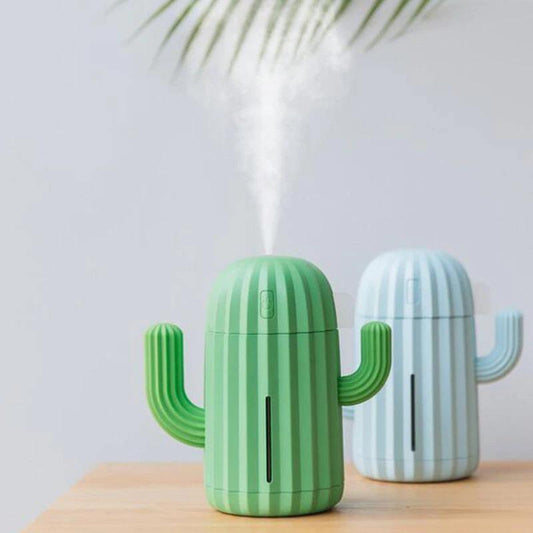
Cactus USB Desk Humidifier with LED and 8 Hour Timer
Regular price From $37.97 USDRegular price -
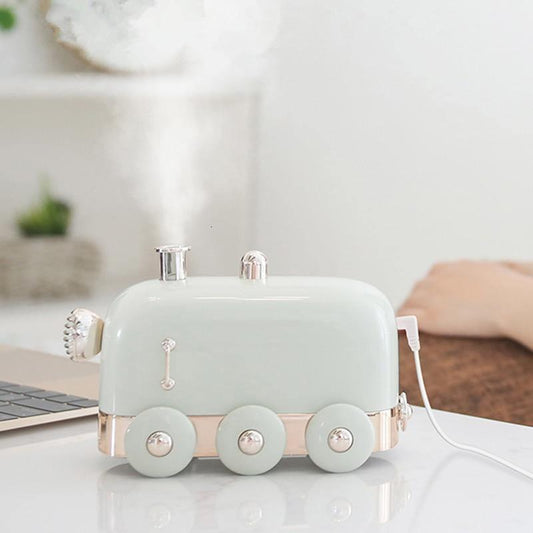
Train Shaped Silicone Aroma Diffuser, 300 ml Tank
Regular price $54.97 USDRegular price -
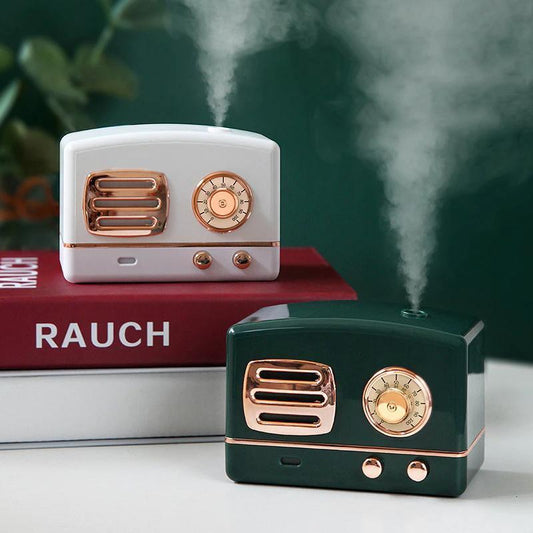
Retro Radio Aroma Diffuser and Humidifier, 6.8 oz
Regular price $31.97 USDRegular price -
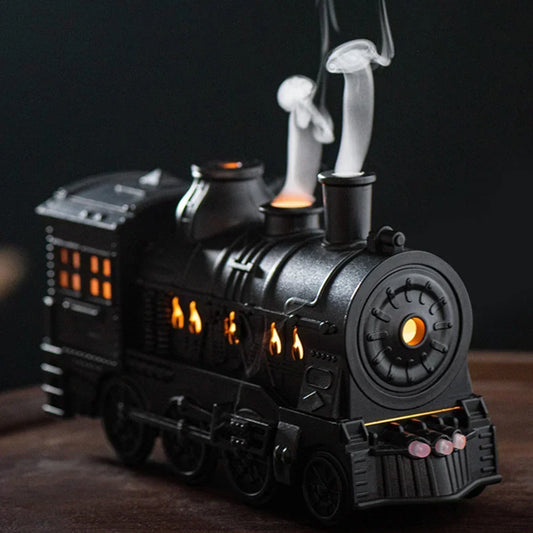
Train Locomotive Ultrasonic Humidifier for Desks
Regular price $49.00 USDRegular price -
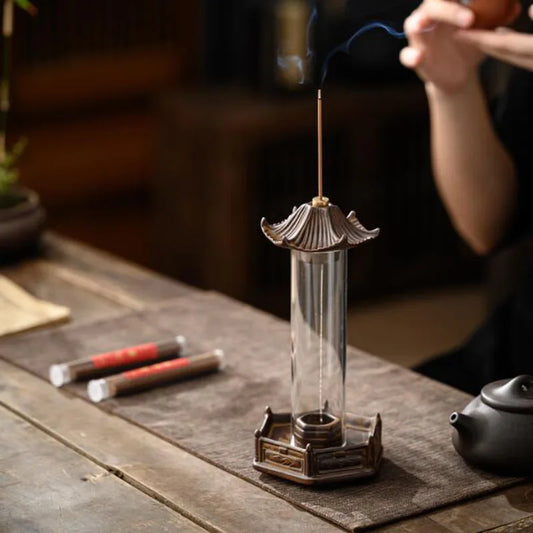
Hexagonal Pavilion Backflow Incense Burner
Regular price $34.95 USDRegular price -
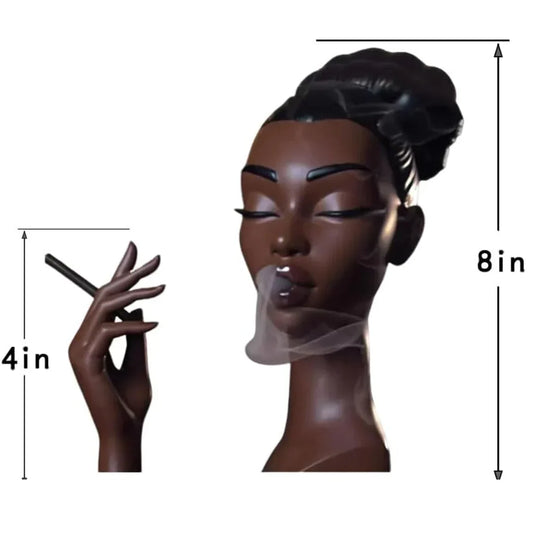
Incense Cone Burner, Resin Bust of a Woman
Regular price $39.00 USDRegular price -
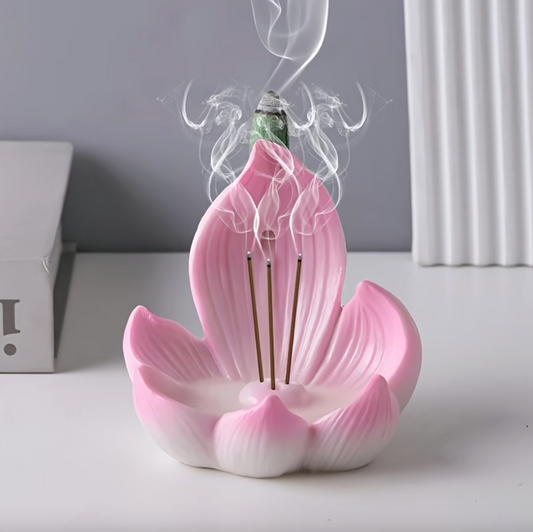
Lotus Incense Fountain for Cones and Sticks
Regular price $34.95 USDRegular price








Start with how long you want the room to smell
Everything in this collection does the same job by a different route, and the route decides where the object can live. A stick burns for 30 to 60 minutes and leaves a smell that hangs around for another two to four hours after the ember dies. A cone burns hotter and faster, usually 15 to 30 minutes, and puts out far more smoke in that window. An ultrasonic diffuser runs cold mist for as long as there is water in the tank, which on a 100 ml tank means three to four hours on continuous output and closer to eight if you set it to pulse.
So the first question is not which scent you like. It is whether you want twenty strong minutes or four quiet hours, and whether you are willing to have a live ember in the room to get it. Answer that and half of this page stops applying to you.
Room volume settles the rest. One stick is plenty for a 10 by 12 ft (3 by 3.7 m) bedroom and vanishes in an open plan kitchen. A 100 ml diffuser is a desk object, whatever the listing photo suggests about the room behind it.
Five formats, and what each one costs you
The differences that matter are burn time, what gets left on the furniture, and what the piece needs from you before it works at all.
| Format | Burn or run time | Leaves behind | What it needs |
|---|---|---|---|
| Incense stick | 30 to 60 min, plus 2 to 4 hours of lingering smell | A trail of gray ash as long as the stick | A holder long enough to catch that trail, on a heatproof surface |
| Standard cone | 15 to 30 min, strong throughout | A dark ash pile and a heat mark under it | A dish of ceramic, stone or metal. Never wood, never a coaster |
| Backflow cone | 15 to 25 min | Ash in the base, and a tar film in the channel after months | A hole through the burner plate, and a hole through the cone |
| Ultrasonic diffuser | 3 to 4 hours per 100 ml continuous, 6 to 8 intermittent | Nothing, unless your water is hard, and then white dust | Power, water to the fill line, 3 to 5 drops of oil per 100 ml |
| Humidifier | Same tank math, no scent unless it is rated for oil | Damp on whatever sits under 12 in from the nozzle | The same power and water. Read the manual before adding oil |
A backflow burner runs on hollow cones, and only hollow cones
The photographs that sell these burners show smoke pouring down the front like water over a rock. That effect has one requirement, and the requirement is not the burner. It is the cone. A backflow cone has a channel drilled up through its flat base, around 1/8 in (3 mm) across, running most of the way toward the tip. A standard cone is solid clay all the way through. A stick has no channel at all, and no stick will ever make smoke fall.
The physics is worth knowing because it tells you what to fix later. Smoke leaving an open burning tip is hot, and hot smoke rises. Smoke pulled down the channel inside the cone cools as it travels, stays dense, and leaves the base heavier than the air in the room. Heavier air falls. That is the whole mechanism, and it collapses the moment any part of the chain breaks.
So turn a cone over before you light it. If the base is smooth and solid, it is a regular cone, and on a backflow burner it will burn cleanly, smell the same, and send every wisp straight up. When you reorder, the packaging says backflow, reflux or waterfall, and those three words mean one thing.
Your smoke is going up. Here is what to check.
This is the single most common complaint about backflow burners, and in most cases it is not a faulty burner. Work down this list in order, because the first two account for most of it.
- The cone is solid. Tip it over and look for the hole in the base. No hole, no fall.
- The cone is not seated over the hole in the plate. It has to sit centered, hole above hole, flat against the surface with no gap for air to sneak under.
- The cone is not properly lit. Hold the flame on the tip for 10 to 20 seconds until it glows orange on its own, then blow the flame out. A half lit cone makes thin smoke, and thin smoke is not dense enough to fall.
- The channel is packed with ash from the last cone. Tip the burner over a bin and tap it.
- There is a draft. This is the cause people suspect last and should suspect first. An open window across the room, a ceiling fan, a heating vent or somebody walking past will shred the column.
- The burner is jammed against a wall, so the smoke has nowhere to spread at the bottom and rolls back up over itself.

Diffusers and humidifiers: read the tank, not the box
Tank capacity decides runtime, and nothing on the front of the box does. A 100 ml unit runs a desk for an afternoon, a 300 ml unit covers an evening in a living room. If a listing gives hours but no milliliters, assume those hours were measured on the lowest setting.
Fill with water first, to the line and not past it, then add 3 to 5 drops of oil per 100 ml. More oil does not make more scent, it makes a film on the ceramic disc that has to be wiped off before the unit atomizes properly again. The mist itself is cold. It will not scald a hand and will not warm a room, which is why one of these is safe on a table where a candle is not.
A diffuser and a humidifier can look identical and often are, but a humidifier sold purely for dry air may have a plastic tank that citrus and pine oils will cloud and eventually craze, so check the manual before the first drop goes in. If your tap water is hard, the fine white dust settling around the unit is dissolved mineral content rather than a fault, and distilled water stops it.
Descale every couple of weeks with vinegar and water left to sit for half an hour, then wipe the disc with a cotton bud and rubbing alcohol. A diffuser gone quiet or weak has a filmed over disc far more often than a dead motor.

Which one belongs in which room
Most disappointment here comes from putting a desk sized object in a living room, or a cone in a space too small to absorb it.
| Room | What works | What to skip |
|---|---|---|
| Bedroom under 120 sq ft | A diffuser on intermittent, or one stick lit an hour before bed and put out | Cones. In that much air a cone is fog, not scent |
| Bathroom with no window | A stick or a small diffuser, door left open afterward | Anything burning behind a closed door while you shower |
| Open plan kitchen and living room | Cones, or two sticks at opposite ends. One stick vanishes here | A 100 ml diffuser, sized for a desk and lost in a room |
| Desk or home office | A USB diffuser on low, refilled daily | Backflow. Falling smoke needs still air, and a working desk has none |
| Rented room with white paint | Anything that does not combust. Water and oil leave no film | Daily cones. Smoke marks a white ceiling within a year |
| A room with a bird or a cat on the shelf | Plain water, no oil, good ventilation | Incense and essential oils both, until a vet says otherwise |
Nothing that burns is fire and forget
A burning stick or cone has no flame after the first twenty seconds, and that is exactly why people treat it as harmless. It is a live ember. It is hot enough to leave a brown ring on a varnished shelf, to melt a dent into a plastic tray, and to set light to a paper napkin it falls on. The ash it drops is still hot when it lands.
So the rules are short. Never leave a lit stick, cone or backflow burner in a room you have walked out of, and that includes answering the door. Put it out instead: press the ember into sand, dip the tip in water, or crush it against the dish. Do not blow on it, because blowing throws sparks. Keep 12 in (30 cm) of clear space around the burner, more if a curtain, a dried arrangement or a stack of paper is anywhere near.
Ventilation is the other half. Incense smoke is fine particulate matter and a closed room concentrates it faster than most people expect, so crack a window while it burns and leave it cracked afterward. If anyone in the house has asthma, that part is not optional.
Electric units have one failure of their own: running dry. Cheaper diffusers without a shutoff keep pulsing an empty plate and cook themselves. Check the listing for an automatic cutoff, and unplug it when the tank is empty either way.
What the burner is actually holding
Every object on this page is a container with a hole in a specific place, and the hole is the working part. A stick holder holds an ember and a 7 in trail of falling ash. A backflow burner holds a channel of cooled smoke on its way down. A diffuser holds 100 or 300 ml of water over a vibrating disc. None of them work because of the outside, though the outside is what the photographs sell.
Which makes the buying questions simple, if unromantic. How long is the ash trail this base has to catch. How wide is the hole in the plate, and does a standard cone cover it. How many milliliters is the tank. Can you get a brush or a cotton bud into the parts that need cleaning in three months, because you will be cleaning them.
The best looking burner in any catalog is the one you quit using in April, when its 3 in dish turns out to sit under a 9 in stick and you got tired of wiping ash off the shelf.
Common questions
Why isn't my backflow incense going down?
Nine times out of ten it is the cone or a draft. Check that the cone has a hole drilled through its flat base, that the hole sits centered over the hole in the burner plate, and that you lit the tip long enough for it to glow orange by itself. If all three are right, close the window and turn off any fan. Falling smoke is only slightly heavier than the air around it, and any moving air breaks the column.
Are backflow incense cones the same as regular cones?
No, and they are not interchangeable in one direction. A backflow cone has a channel bored up through its base so smoke can travel down instead of straight up. A regular cone is solid. Regular cones burn perfectly well on a backflow burner, they just send the smoke upward and the waterfall effect never appears. Backflow cones do work on a plain dish, and burn a little faster there.
Do incense sticks go out on their own?
Yes. A stick burns down its length and the ember dies when it reaches the bare bamboo at the bottom, usually 30 to 60 minutes in depending on thickness. That is not a reason to leave one unattended, because the ash it drops along the way is hot when it lands and a bumped holder puts a live ember on the furniture.
Is it safe to burn incense in your house?
Occasional burning in a ventilated room is generally treated as low risk, but incense smoke is fine particulate matter and behaves like any other smoke indoors. Burn it with a window cracked, keep it clear of anything that can catch, and never leave it alight in an empty room. If someone in the house has asthma, use a diffuser instead, since nothing burns and there is no smoke to breathe.
Is it bad to burn incense in a small room?
A small closed room concentrates smoke fast, and a cone in a bathroom or a box bedroom is more smoke than that volume of air can carry. Under about 100 sq ft, use one stick rather than a cone, open a window while it burns, and leave the door open for a few minutes afterward. Doing it daily in a room that size is worth avoiding.
Should I use an essential oil diffuser with or without water?
An ultrasonic diffuser needs water. The disc vibrates the water into mist and the oil rides along with it, so oil on its own has nothing to carry it and will simply coat the plate. Fill to the line, add 3 to 5 drops per 100 ml, and stop there. Waterless nebulizing diffusers are a different device entirely, and they take neat oil by design.
What is the difference between a humidifier and a diffuser?
Mechanically, often nothing at all: both are usually an ultrasonic disc turning water into cold mist. The difference is intent and tank size. A humidifier is built to raise the moisture in a room and carries a larger tank for it. A diffuser is built to carry scent and is generally smaller. The one thing to check before mixing them is whether the humidifier tank is rated for oil, because citrus and pine will craze some plastics.
