
Collection: Propagation
Cuttings root for free, which makes this the only decor that costs nothing after the vessel. What matters is that the node sits under water and the leaf stays above it. Glass shows the roots as they come, and the roots are the whole point.

-
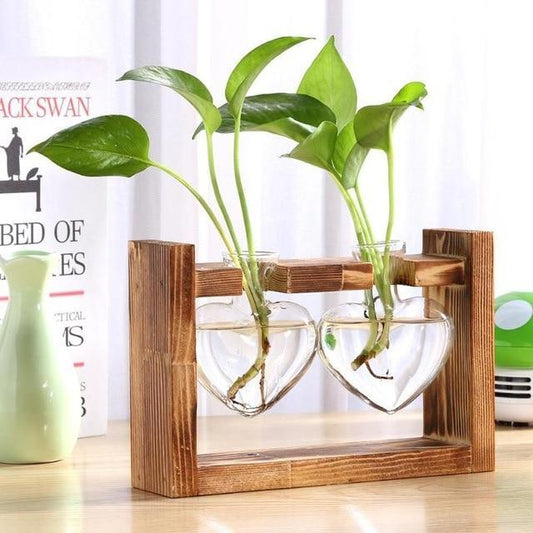
Heart Shaped Glass and Wood Propagation Vase
Save 45%Regular price From $29.95 USDRegular price$54.99 USDSale price From $29.95 USDSale -
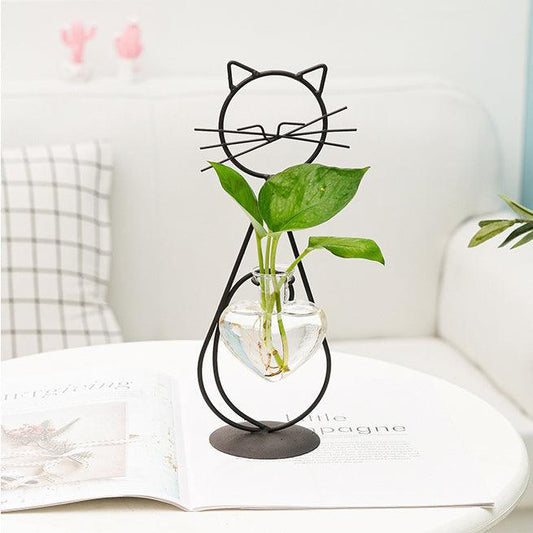
Iron Cat Stand with Heart Glass Propagation Vase
Save 50%Regular price From $27.97 USDRegular price$55.99 USDSale price From $27.97 USDSale -
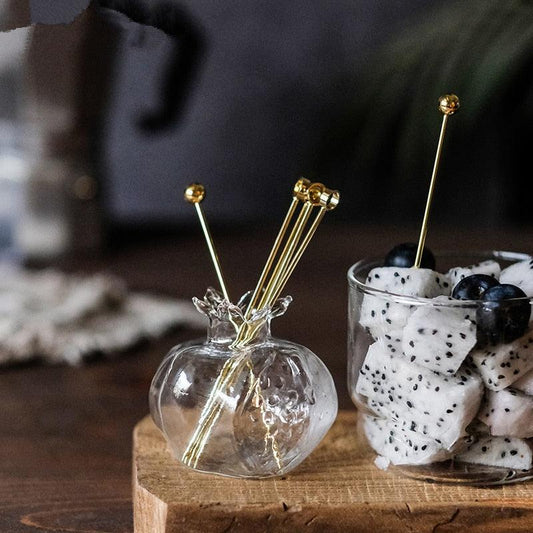
Pomegranate Borosilicate Glass Propagation Vase
Save 47%Regular price From $22.97 USDRegular price$43.99 USDSale price From $22.97 USDSale -
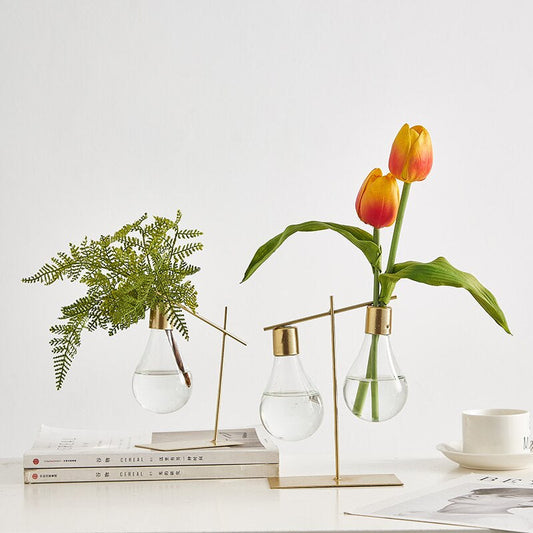
Light Bulb Propagation Vase on Gold Iron Stand
Save 32%Regular price From $49.97 USDRegular price$74.00 USDSale price From $49.97 USDSale -
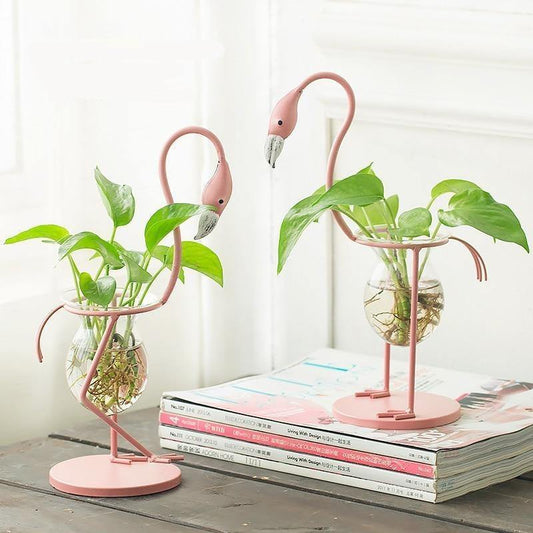
Flamingo Propagation Station with Glass Bulb Vase
Save 42%Regular price From $31.97 USDRegular price$56.00 USDSale price From $31.97 USDSale -
Lighted Propagation Vase with Glass Bowl, 8 in
Save 28%Regular price $97.97 USDRegular price$137.00 USDSale price $97.97 USDSale -
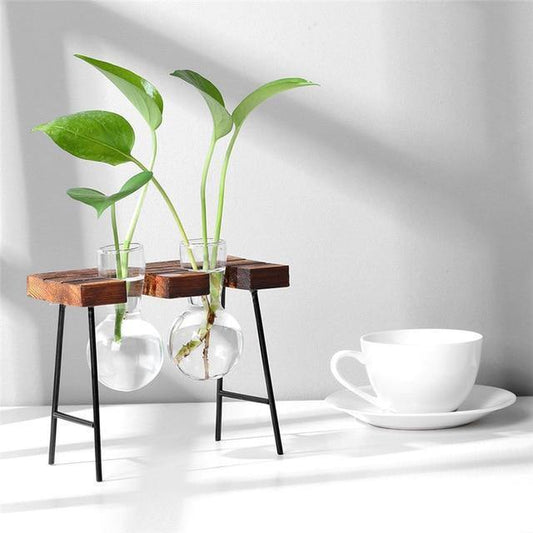
Glass Propagation Bulbs on a Wood and Metal Stand
Save 43%Regular price From $29.95 USDRegular price$53.00 USDSale price From $29.95 USDSale -
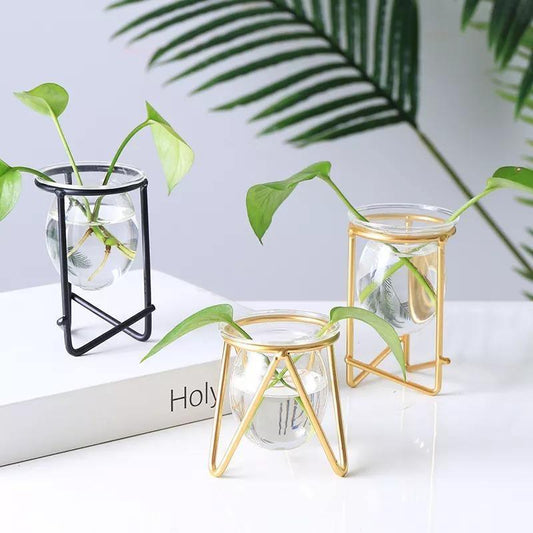
Glass Propagation Vase on a Geometric Iron Stand
Save 42%Regular price $17.95 USDRegular price$31.00 USDSale price $17.95 USDSale -
A Frame Wood Stand Propagation Vase, One to Three Bulbs
Save 41%Regular price From $23.97 USDRegular price$40.99 USDSale price From $23.97 USDSale -
Vertical Wood Stand Propagation Vase, One or Two Bulbs
Save 42%Regular price From $26.95 USDRegular price$47.00 USDSale price From $26.95 USDSale -
Wood Frame Propagation Vase with Glass Tube
Save 28%Regular price $62.97 USDRegular price$87.99 USDSale price $62.97 USDSale









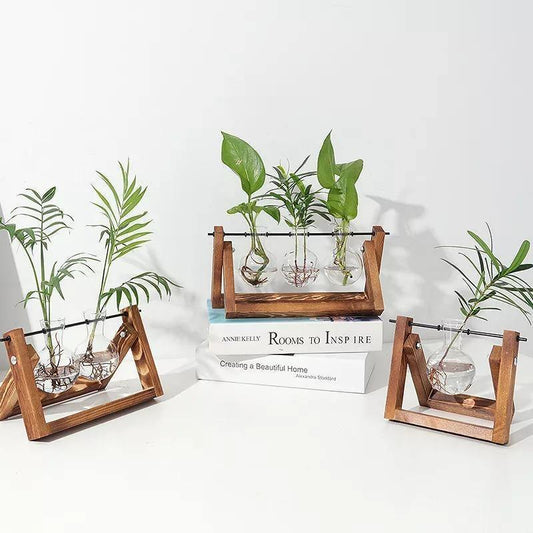

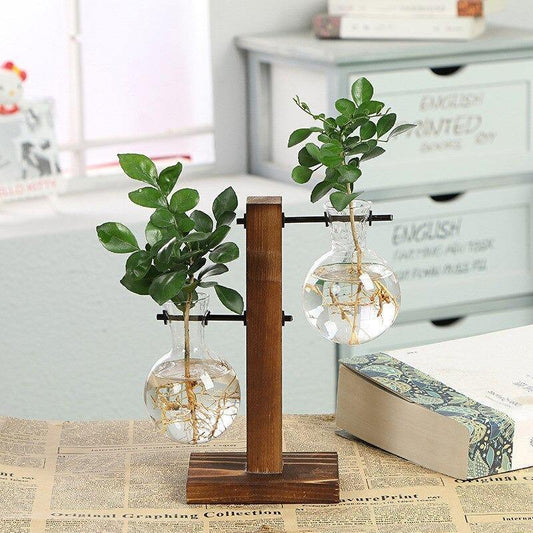

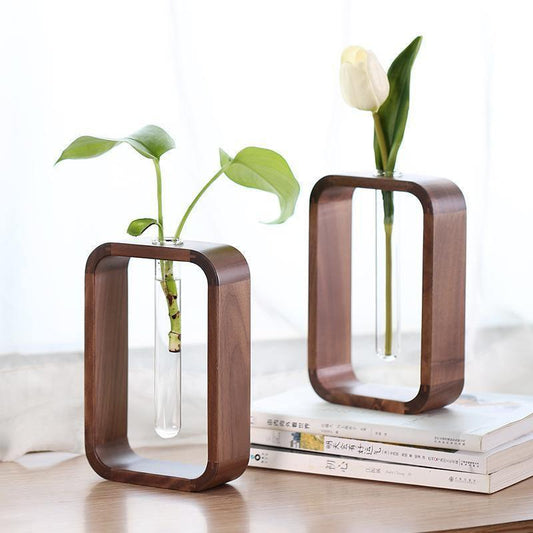

The node goes under water, the leaf stays above it
One rule carries nearly all of water propagation. The node, meaning the small bump on the stem where a leaf joins it, has to sit under the water. The leaf has to stay above it. Get those two facts right and most common houseplants root without any further help.
Roots come out of the node and nowhere else. A length of bare stem sitting in water with no node on it will never produce a root, however long you wait, and that accounts for a fair share of cuttings that sit clear and green for a month doing nothing at all.
A submerged leaf does the opposite kind of damage. It softens in about two days, then rots, and the rot feeds the bacteria that turn the water cloudy and go on to attack the stem. Strip every leaf that would fall below the waterline before the cutting goes in, and keep two or three leaves at the top, because those are what feed the cutting while it has no roots.

Where to cut, and how to spot a node
On a pothos or a philodendron the node is a slightly swollen band on the stem, often a shade browner than the rest, with a leaf stalk and sometimes a small brown nub growing from it. That nub is an aerial root, and a cutting that already has one roots faster than a cutting that does not.
Cut about 1/4 in (6 mm) below the node with clean scissors or a blade. Leaving that short stub protects the node itself from bruising, and cutting further down leaves you with dead stem sitting in the water. Wipe the blade with rubbing alcohol between plants, since a blade carries a problem from one plant to the next.
Take a piece with at least one node and two leaves. Longer cuttings are not better. A single node with two leaves roots faster than a 12 in (30 cm) length with five, because the cutting is supporting less growth on no root system at all.
What roots in water, and what only pretends to
Water works for soft stemmed tropicals and works badly for anything that stores water in its own leaves. Succulents and cacti rot in water before they root, and the same goes for most woody herbs past their first green growth.
| Cutting | Roots in water | First roots in | Worth knowing |
|---|---|---|---|
| Pothos | Yes, the easiest of the lot | 7 to 14 days | Take a piece with an aerial root nub and it goes faster |
| Heartleaf philodendron | Yes | 10 to 14 days | Roots at almost any node on the vine |
| Monstera | Yes | 3 to 6 weeks | Needs a node with an aerial root, a leaf alone gives nothing |
| Tradescantia | Yes | 5 to 7 days | Fast enough that the water goes cloudy before the roots stop |
| Spider plant offset | Yes | 5 to 10 days | Root the plantlet while it is still attached if you can |
| Begonia leaf | Yes, slowly | 4 to 8 weeks | The leaf stalk sits in the water, not the leaf blade |
| Snake plant section | Yes, very slowly | 6 to 10 weeks | A variegated one comes back plain green |
| Fiddle leaf fig | Yes | 4 to 8 weeks | Take a stem section, a single leaf roots and then stalls |
| Succulents and cacti | No | Never | They rot. Let the cut callus for three days, then dry soil |
| Rosemary and woody herbs | Poorly | 4 weeks or more | Softwood tips only, and soil beats water for both |
The vessel sets how often you have to think about it
Glass is the point here. You watch the roots come, and more usefully you see the water go cloudy on day four instead of finding out a week later. The shape matters for one practical reason: how much water sits in there, and therefore how many days pass before the node is dry.
A narrow neck also does the job a bud vase does for a flower. It holds a single cutting upright with its node in the right place instead of letting it slide down and float sideways, which is what happens in a wide jam jar with one stem in it.

| Vessel | Holds about | Suits | Watch for |
|---|---|---|---|
| Test tube | 1 to 2 fl oz (30 to 60 ml) | One cutting, one node, a row of them on a rack | Runs low in three days on a warm windowsill |
| Bulb or globe vessel | 5 to 8 fl oz (150 to 240 ml) | Two or three cuttings from the same plant | The neck traps roots, so move it to soil before they thicken |
| Narrow neck bottle | 8 to 12 fl oz (240 to 350 ml) | A long vine cutting that needs holding upright | Getting a rooted cutting back out without snapping roots |
| Wide mouth jar | 16 fl oz (475 ml) and up | A handful of cuttings at once, easy to clean | Cuttings slump sideways and their leaves end up under water |
Light, warmth and what to fill it with
Bright indirect light, meaning a spot where the cutting can see the sky but the sun never lands on the glass directly. Direct sun through a clear vessel warms the water, and warm water in a small volume grows algae in under a week.
Room temperature does the rest. Cuttings root fastest between 65 and 75 F (18 to 24 C), and a cutting on a windowsill that drops to 55 F (13 C) at night in winter simply stops. If nothing has happened in three weeks and the stem still looks healthy, the room is usually too cold rather than the cutting being dead.
Tap water is fine in most places. If yours is heavily chlorinated, leave it standing in an open jug overnight and the chlorine gasses off. Skip softened water, which carries sodium, and skip adding fertilizer while the cutting is rooting: it has no roots to take it up and it feeds algae instead.
Changing the water without wrecking the roots
Change it every three to five days, and change it rather than topping it up. Topping up leaves the bacteria in place and raises the waterline onto stem that was dry, which is the section least able to cope with being wet.
Hold the cutting in place with two fingers, pour the old water off, and refill with water at room temperature. Cold water straight from the tap on new roots is a small shock every time. Once roots reach an inch or so they are brittle, so pour rather than tipping the whole thing into a sink.
Every second or third change, clean the glass. A film builds on the inside of a propagation vessel exactly as it does in a flower vase: mineral haze from hard water plus a slick layer of bacteria. White vinegar and a bottle brush handles both. For a test tube too narrow for a brush, uncooked rice and a hard swirl scours the inside.
Rot, algae, and cuttings that do nothing
Rot shows as a soft brown or black stem end that feels slimy between your fingers, and the water usually smells before it looks wrong. Take the cutting out, cut back into firm green tissue above the damage, rinse it, and start again in a clean vessel with fresh water. Rot never reverses, so cutting early saves the cutting.
Green algae on the glass is untidy rather than dangerous, and it means sun on the water. Move the vessel back from the window. Roots that have gone brown and mushy are rot; roots that have gone brown and stayed firm are usually fine, since some species root brown from the start.
A cutting that sits green and healthy for six weeks and does nothing is nearly always a cutting with no node under the water, or a room under 60 F (16 C). Lift it out and look at the submerged section. If there is no node down there, take a new cutting rather than waiting out another month.
Moving to soil, or leaving it where it is
Move a cutting to soil once the roots reach 2 to 4 in (5 to 10 cm), and sooner rather than later. Water roots and soil roots are built differently: water roots are fine, white and brittle, adapted to taking oxygen straight from the water, and a cutting that grew 8 in (20 cm) of them loses most of that work in the move.
Pot into a small container, no larger than 4 in (10 cm) across, and keep the soil properly damp for the first two weeks rather than letting it dry between waterings. The cutting is switching root systems and cannot survive drought during the changeover. After a month, water it like any other plant.
You can also leave it. A pothos will live in a glass of water for years, growing slowly, so long as you change the water and it gets light. It will never match one in soil for size, which is the honest trade. That is the appeal of this whole category: the cutting costs nothing, the water costs nothing, and the only thing you actually buy is the vessel that holds them in the right relationship to each other.
Common questions
Can you root cuttings in just water?
Yes, for soft stemmed houseplants like pothos, philodendron, tradescantia and monstera. The cutting needs at least one node under the water and no leaves below the surface. No rooting hormone, no additive and no fertilizer is required, since the cutting is living on its own stored energy and the light hitting its leaves. Succulents, cacti and most woody plants are the exception and rot before they root.
What plant cuttings can you propagate in water?
Pothos, heartleaf philodendron, monstera, tradescantia, spider plant offsets, begonia leaves, coleus, mint, basil and fiddle leaf fig all root in water. Snake plant sections work too, though they take six to ten weeks and a variegated one comes back plain green. Anything that stores water in fleshy leaves, meaning succulents and cacti, does not: let the cut end callus for three days and put it in dry soil instead.
Is it better to start plant cuttings in water or soil?
Water is easier to get right and you can see exactly what is happening, which makes it the better choice for a first attempt. Soil gives a stronger plant in the end, because the roots that form are already the kind the plant will keep. The compromise most people land on is rooting in water and moving to soil early, at 2 to 4 in (5 to 10 cm) of root, before too much of the growth is the wrong type.
How long does it take for plant cuttings to root in water?
Between one week and two months depending on the plant. Tradescantia and pothos show white root tips in 7 to 14 days, monstera and fiddle leaf fig take 3 to 8 weeks, and snake plant sections take up to 10 weeks. Warmth is the main variable: a cutting at 70 F (21 C) roots roughly twice as fast as the same cutting at 60 F (16 C).
How often should I change the water when propagating cuttings?
Every three to five days, and replace it rather than topping it up. Topping up leaves the existing bacteria in the vessel and pushes the waterline higher onto stem that was previously dry. Use water at room temperature, since cold water from the tap is a shock to new roots. If the water clouds before three days, something is rotting in there and needs finding.
How do you care for cuttings in a propagation station?
Bright indirect light, room temperature between 65 and 75 F (18 to 24 C), and fresh water every three to five days. Keep the nodes covered and the leaves dry. Clean the glass every second or third water change with white vinegar, because mineral film and bacterial slime build up on the inside just as they do in a flower vase. Add no fertilizer until the cutting is in soil.
Why are my cuttings rotting in water?
Almost always a leaf below the waterline, which softens within two days and then rots and spoils the water. The other causes are water left unchanged for a week or more, a dirty vessel, and cuttings packed so tightly that nothing gets oxygen. Cut back to firm green tissue above the soft section, rinse the cutting, and restart it in clean water in a clean vessel. Rot does not heal, so cut sooner than feels necessary.
