
Collection: Hanging Planters
Hanging a plant buys back floor space and puts the trailing ones where they can actually trail. Wall mounted and ceiling hung, in metal, ceramic and rope. Water them in the sink and let them drain fully before they go back up.

-
Ceramic Wall Planter with Iron Frame and Bamboo Tray
Save 30%Regular price $60.97 USDRegular price$88.00 USDSale price $60.97 USDSale -
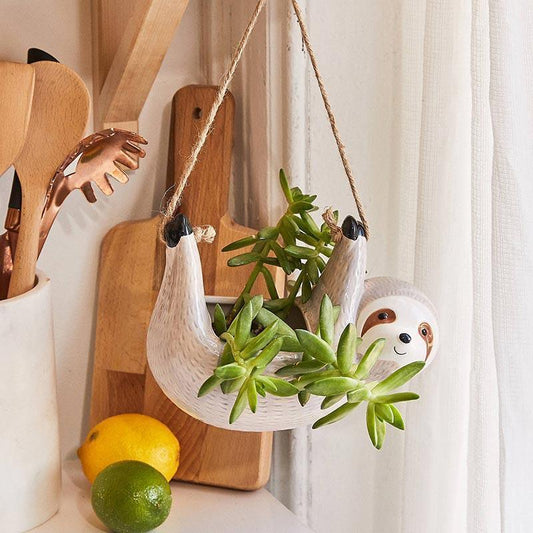
Ceramic Sloth Planter for Small Succulents, Two Shapes
Save 43%Regular price $34.95 USDRegular price$61.99 USDSale price $34.95 USDSale -
Metal Halo Hanging Planter, Round or Oblong
Save 32%Regular price From $44.97 USDRegular price$66.99 USDSale price From $44.97 USDSale -
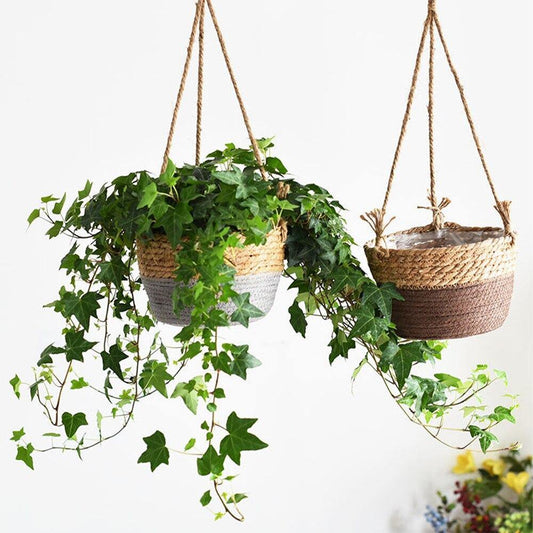
Jute Rope Hanging Planter Basket, 7.9 in
Save 43%Regular price $33.97 USDRegular price$60.00 USDSale price $33.97 USDSale -
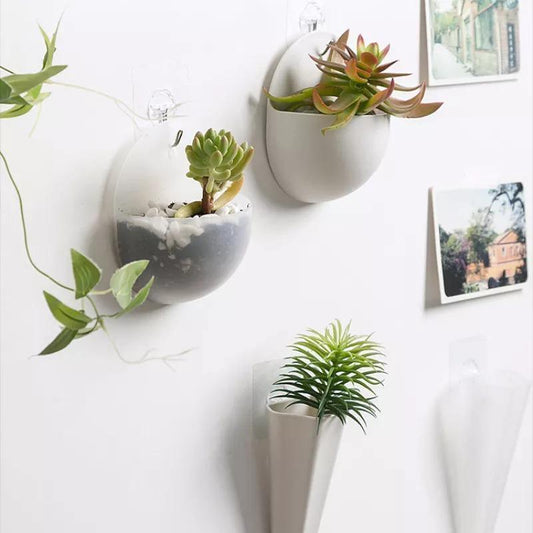
Wall Hanging Planters, Cone or Circle, White or Clear
Save 42%Regular price $18.97 USDRegular price$33.00 USDSale price $18.97 USDSale -
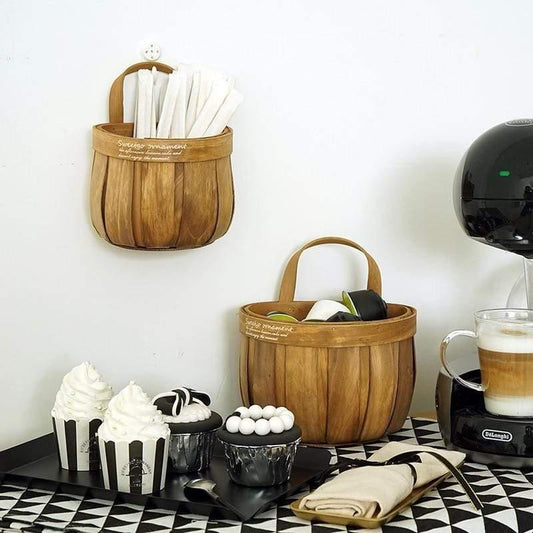
Round Wood Planter and Storage Bin, Two Sizes
Save 45%Regular price From $27.97 USDRegular price$50.99 USDSale price From $27.97 USDSale -
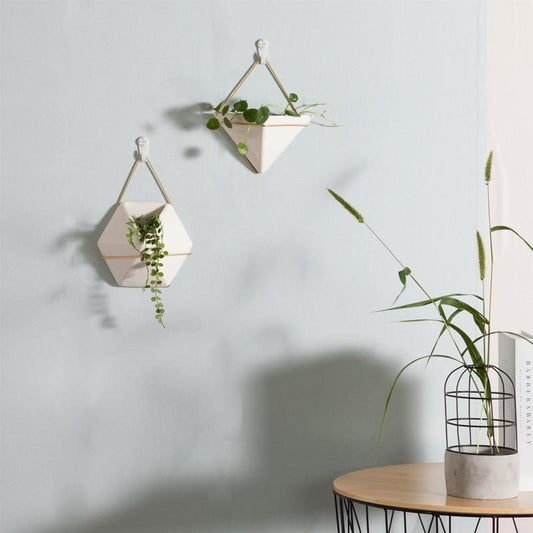
Hanging Geometric Wall Planter, Hexagon or Triangle
Save 23%Regular price From $75.97 USDRegular price$98.99 USDSale price From $75.97 USDSale








Weigh it wet, because that is the number the hook sees
Every hanging planter is bought empty and lived with full. Soil holds water and water is heavy: a pot weighs roughly a third more in the hour after watering than three days later. Size the fixing to the wet weight and the dry weight looks after itself.
Rough figures. A 6 in (15 cm) pot with a pothos in damp soil runs about 3 lb (1.4 kg). An 8 in (20 cm) ceramic pot with a fern comes in near 9 lb (4 kg), since the ceramic alone is 3 lb of that. A 10 in (25 cm) basket soaked through can pass 15 lb (6.8 kg). None of those are large numbers, and every one of them beats what an adhesive hook holds.
A hanging planter also moves. It swings when you brush past it and every time you lift it down to water, and that repeated tug wears an anchor faster than the static weight does.
The ceiling is not a wall, and drywall alone is not a fixing
On a wall, an anchor carries a hanging load partly in shear, meaning the weight drags down the face of the board. On a ceiling, the same anchor gets pulled straight out of the board with nothing resisting it but its own grip. That is the hardest way to load drywall, so halve again whatever figure you were already halving.
The honest answer for a ceiling is a joist. Ceiling joists sit 16 in (41 cm) apart center to center in most US framing, sometimes 24 in (61 cm). Find one with a stud finder, drill a pilot hole, and thread a screw hook 1 1/2 in (38 mm) into the timber. That fixing holds far more than the plant and stops being something you think about.
If no joist lands where the plant needs to be, a toggle bolt swag hook is the fallback, and it caps the plant at around 15 lb (6.8 kg) wet. A plain screw or a plastic plug in drywall pulls out, usually a week or two after you decide it is fine.

| Where it hangs | Fixing that works | Sensible wet weight | What goes wrong otherwise |
|---|---|---|---|
| Ceiling, joist behind | Screw hook 1 1/2 in (38 mm) into timber | 40 lb (18 kg) and up | Nothing, this is the one that lasts |
| Ceiling, drywall only | Toggle bolt swag hook | Up to 15 lb (6.8 kg) | Pulls straight out with a plate of ceiling attached |
| Wall, stud behind | #8 wood screw or a lag hook | 40 lb (18 kg) and up | Nothing |
| Wall, drywall only | Self drilling threaded anchor, two of them | Up to 20 lb (9 kg) shared | The anchor levers out, faster if the pot swings |
| Wall, brick or concrete | Masonry bit plus a sleeve anchor | 50 lb (23 kg) and up | Drilling into a mortar joint instead of the brick |
| Anywhere, adhesive hook | Not a fixing for plants | Under 5 lb (2.3 kg) at best | Lets go in a humid room, usually at night |
Wall mounted or ceiling hung
These solve different problems. A wall planter puts greenery on a vertical surface that was doing nothing, and you reach it standing on the floor. A ceiling planter gives a trailing plant room to trail, which no wall pocket can, and commits you to a step stool at every watering.
| Wall mounted | Ceiling hung | |
|---|---|---|
| Fixings | Usually two, load shared and no rotation | One point, everything on it |
| Watering | Reachable, but the wall is right behind it | Lift down and take it to the sink |
| Suits | Succulents, small trailers, kitchen herbs | Pothos, string of pearls, ferns, anything that hangs long |
| Drips land on | Your wall and baseboard, without a tray | Whatever is under it, which is why you move it |
| Renting | Two small holes, easy to fill | One hole, but in a ceiling a landlord looks at |
| Head clearance | Not an issue | Lowest leaf above 6 ft 8 in (203 cm) in a walkway |
Drainage, and the trade you are making
A hanging planter with a drainage hole and no tray drips on your floor. One with no hole keeps the floor dry and moves the risk inside the pot, where water collects at the bottom and drowns the roots sitting in it. Both designs sell, and the packaging rarely says which problem you are buying.
The straightforward fix is to treat the hanging vessel as a cover and keep the plant in the nursery pot it came in. Water in the sink, drain twenty minutes, drop it back inside. Drainage and a dry floor, and you can swap the plant without repotting.
If you plant straight into a sealed pot, put 1 in (2.5 cm) of gravel or leca in the bottom and water in small amounts, roughly a fifth of the pot volume at a time. Gravel does not create drainage, whatever gets said about it. It gives the excess somewhere to sit below the roots, which buys margin rather than a solution.
Watering one without a puddle underneath
The reliable method is to take it down. Lift the pot out, water it in the sink until it runs from the base, leave it twenty minutes to finish draining, then hang it back. That is the only approach that soaks the root ball properly and leaves nothing on the floor.
Everything else involves holding back. A long spout can reaches the soil at the back of the pot without soaking the leaves in front, which is where rot starts on a fern. Pour slowly, stop at about a fifth of the pot volume, wait a minute, repeat. Ice cubes are a bad idea indoors, since cold water on tropical roots shows up as brown leaf edges two weeks later.
Hanging plants dry faster than the same plant on a table, and everyone underestimates by how much. Warm air gathers near the ceiling and air moves around every side of a suspended pot. Expect to water a hanging pothos every five to seven days in summer against ten to fourteen on a shelf.

Height, clearance and where it actually goes
Two heights matter. The lowest leaf has to clear 6 ft 8 in (203 cm) anywhere people walk, or somebody will wear it. In a corner nobody crosses, hang the base at 5 ft to 5 ft 6 in (152 to 168 cm), which puts the foliage at eye level rather than making it a detail on the ceiling.
Then allow for what the plant does next. A string of pearls grows 2 to 3 ft (60 to 90 cm) of trail within two years, and a pothos passes 6 ft (183 cm) if you let it. Hang for that length, not for the plant in the photograph.
Stay clear of a door swing and the top of a radiator, since rising heat dries a hanging pot in half the usual time. A window is the obvious spot, but a plant hung against south facing glass scorches in summer. Set it 2 to 3 ft (60 to 90 cm) back into the room.
What grows well suspended in the air
The plants that suit hanging are the ones that trail, tolerate drying out, and accept a small volume of soil. Pothos and heartleaf philodendron do all three and forgive being forgotten. String of pearls and string of hearts want the height so their strands have somewhere to fall, and both prefer drying out completely, which suits a pot that dries fast anyway.
Boston ferns and maidenhairs look right up there and are the hardest to keep, since they want constantly damp soil in the position that dries quickest. Hang a fern in a bathroom with a window and accept watering twice a week. Spider plants sit in the middle, tolerant and easy, and they send plantlets down below the pot on their own stems.
Succulents work in a wall pocket by a bright window, where they need water about every three weeks. They rarely work in a ceiling hanger, since almost every ceiling spot sits too far from the glass for them.
The pot holds less than it looks like it does
Nearly every complaint about a hanging plant traces back to soil volume. A 6 in (15 cm) hanging pot holds around 1 quart (1 L) of soil once you allow for the curve of the base, roughly half what a straight sided pot of the same width holds. Half the soil means half the water reserve and twice the watering.
So read the inside diameter and the depth rather than the outside dimensions, and check whether the vessel takes a standard nursery pot. A 6 in (15 cm) planter that accepts a 6 in nursery pot beats a wider one that accepts nothing and forces you to repot.
Then buy the plant to suit the volume. A trailing plant in a small pot is a fair match, since the growth heads down rather than out. A plant that wants a deep root run stalls at whatever size a shallow hanging bowl allows, and watering does not change that.
Common questions
How do you hang a plant from the ceiling without drilling?
The workable options are a tension rod across a window recess, an over the door hook, a freestanding plant hanger, or a curtain rail already rated for the weight. Adhesive ceiling hooks are sold for this and are not up to it, since a ceiling loads the pad in pure peel and a damp room finishes it. One screw hook into a joist leaves a smaller repair than a failed anchor does.
How much weight can a ceiling hook hold?
A screw hook driven 1 1/2 in (38 mm) into a joist holds well over 40 lb (18 kg), past any indoor plant. The same hook in drywall alone holds close to nothing. A toggle bolt swag hook in a 1/2 in (13 mm) drywall ceiling is good for around 15 lb (6.8 kg) static, less if the plant swings. Ceilings pull anchors straight out rather than dragging them down, so halve any rating printed for wall use.
Do hanging planters need drainage holes?
The plant needs drainage. The hanging vessel does not, provided you keep the plant in a nursery pot inside it and lift that pot out to water. Plant straight into a sealed hanging pot and you commit to careful watering forever, since nothing corrects an overwatering once the water sits at the bottom. A hole with no tray means drips on the floor, which is the trade sealed designs are making.
What can I put in the bottom of a planter without drainage holes?
About 1 in (2.5 cm) of gravel, leca or lava rock, giving excess water somewhere to collect below the root zone. Activated charcoal on top of it helps with the smell stagnant water produces. None of this creates drainage: it buys margin for error, nothing more. Watering in small amounts, around a fifth of the pot volume at a time, matters far more than what sits in the bottom.
How do you water hanging plants without dripping?
Lift the pot down, water it in the sink until it runs from the base, and leave it twenty minutes before hanging it back. If it will not come down, use a long spout can, pour at the soil rather than over the leaves, stop at about a fifth of the pot volume, wait a minute and repeat. A drip tray clipped under the pot catches the last of it. Never water enough to run through in place unless something below is catching it.
What are some good indoor plants for hanging pots?
Pothos and heartleaf philodendron are the easiest, and both trail several feet with almost no attention. String of pearls and string of hearts want a bright spot and complete drying between waterings. Spider plants are tolerant and send plantlets down on their own stems. Ferns look the part but need damp soil in the position that dries fastest, so keep those for a bathroom with a window.
How often do you water hanging plants?
More often than the same plant on a table, usually every five to seven days in summer for a pothos against ten to fourteen at floor level. Warm air gathers near the ceiling, air circulates around every side of a suspended pot, and hanging pots hold less soil than they look like they do. Check by weight rather than calendar: lift the pot, and if it feels light it wants water.
