
Collection: Sculptures & Figurines
A shelf needs one object that does nothing useful. Sculpture is the cheapest way to give a room a focal point, and the only category here where the wrong scale is more forgivable than the wrong shape. Busts, animals and abstract forms, in resin, ceramic and wood.

-
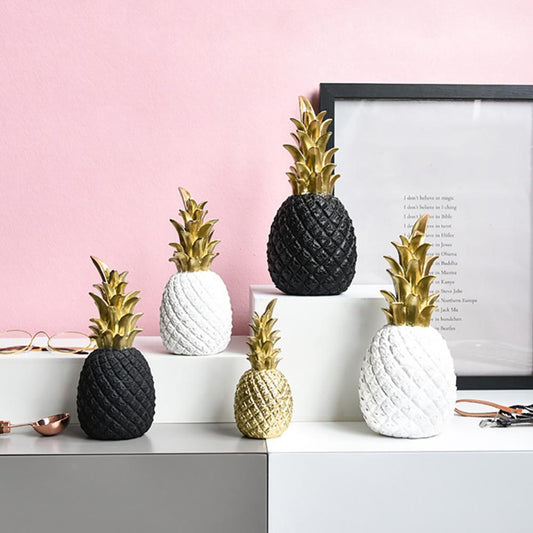
Glossy Resin Pineapple Ornament, Three Sizes
Regular price From $19.95 USDRegular price -
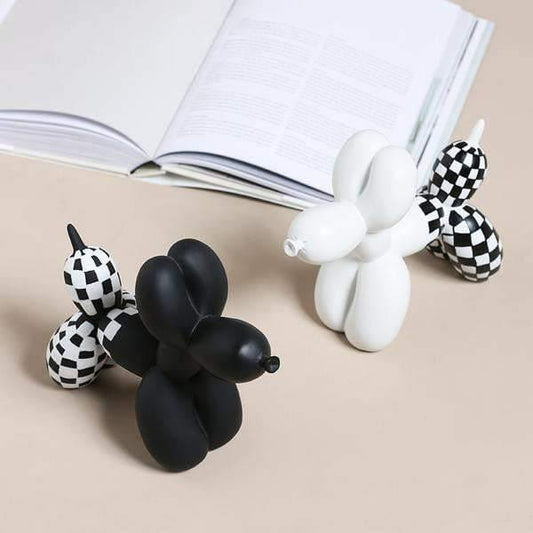
Resin Balloon Dog Figurine, Checkered Black or White
Regular price From $44.97 USDRegular price -
Resin Head Sculptures with Flower Hair, Four Sets
Regular price From $151.97 USDRegular price -
Kissing Couple Resin Sculpture for a Shelf
Regular price $103.97 USDRegular price -
Blue David Head Bust Statue with Gold Post
Regular price $222.97 USDRegular price -
Iron Line Art Face Sculpture, Full or Half Face
Regular price From $39.95 USDRegular price -
Carved Wooden Dog and Person Figurines
Regular price From $83.95 USDRegular price -
Resin Flamingo Figurine in Three Poses, Sold Singly
Regular price $22.97 USDRegular price -
Balloon Dog Resin Sculpture in Five Colors
Regular price $24.97 USDRegular price -
David Bust Statue with Gold Accent, White or Black
Regular price $69.97 USDRegular price -
Abstract Thinker Resin Figurine, 5.1 in Tall
Regular price $33.97 USDRegular price -
Clear Glass Sphere Crystal Ball with Optional Stand
Regular price From $13.97 USDRegular price -
Mini Newton's Cradle Desk Toy in Steel
Regular price $26.97 USDRegular price -
Resin French Bulldog Coin Bank with Metal Tray
Regular price $97.97 USDRegular price -
Geometric Reindeer Sculptures in Resin, Set of Two
Regular price From $69.00 USDRegular price -
Metal Leaf Sculpture Figurines, Ginkgo, Palm and Fan
Regular price From $39.00 USDRegular price -
French Bulldog Coin Bank in Resin with Opening Base
Regular price $69.97 USDRegular price -
Geometric Panther Sculpture in Resin, 10.2 in
Regular price From $44.97 USDRegular price -
Surrealist Melting Clock, Drapes Over a Shelf Edge
Regular price $39.00 USDRegular price -
Entwined Heart and Cross Sculpture for a Wedding Gift
Regular price $44.95 USDRegular price -
Steampunk Octopus Statue with Telescope and Gears
Regular price $49.00 USDRegular price -
Abstract Face Sculptures on Black Bases, Single or Set
Regular price From $39.00 USDRegular price -
Squatting Balloon Dog Resin Figurine, Eight Colors
Regular price $39.00 USDRegular price -
Minimalist Resin Cat Figurine, Two Poses
Regular price $29.00 USDRegular price






The problem is rarely the object, it is the crowd
A shelf of small things reads as clutter no matter how good each piece is. Eight objects between 3 and 5 inches tall, evenly spaced, give the eye nothing to land on and nothing to skip, so it registers the whole row as texture. Three objects at 5, 9 and 12 inches read as an arrangement.
That is the whole difference, and it costs nothing. Put two thirds of what is currently on the shelf into a drawer, keep the pieces with the most height difference between them, and the ones you keep look better than they did in company.
It also fixes the size mistake underneath. Anything under about 4 inches tall disappears on a 12 inch deep shelf, because the shelf above cuts the light and the depth swallows it. Small figures belong at the front edge, on a stack of books, or in a group where the group is the object.
Odd numbers, three heights, one triangle
The rule of three is not superstition, it is about how eyes track. An even pair splits attention down the middle and reads as symmetry, which is restful and static. Three objects make the eye move between them, and it keeps moving because there is no obvious pairing to settle on.
Make the heights genuinely different: each piece at least a quarter taller than the next, so 6, 8 and 11 inches rather than 6, 7 and 8. Pull them into a triangle in plan rather than a line, with one piece slightly forward, and let two of the three touch or overlap from the front. A group with a gap between every item is three lonely objects, not a group.
Above five pieces, go up in odd numbers or split into two groups with real space between them. Seven objects in one huddle is a collection, which is a different thing and needs its own shelf to work.
How big, by where it stands
Scale is the failure people notice without being able to name. A 6 inch figure on a mantel below a large mirror looks lost, and the same figure on a bathroom shelf looks right. The number that matters is the size of the empty space around it, not the size of the room.
| Where | Height that works | The rule behind it |
|---|---|---|
| Bookshelf | 5 to 12 in (13 to 30 cm) | No more than two thirds of the clear height, so it does not touch the shelf above |
| Console or entry table | 10 to 18 in (25 to 45 cm) | Half to two thirds the height of whatever hangs above it |
| Mantel | 12 to 20 in (30 to 50 cm) | Tallest piece about half the space between the mantel and the ceiling |
| Coffee table | Under 12 in (30 cm) | You have to see the person sitting opposite |
| Dining table | Under 12 in or above 24 in | Either below the sight line or clearly above it, never across it |
| Floor, beside a chair | 24 to 48 in (60 to 120 cm) | Anything shorter looks dropped rather than placed |
| Desk or nightstand | 4 to 8 in (10 to 20 cm) | Small enough to move with one hand when you need the surface |
Resin, ceramic, metal or stone
Most decorative figures sold today are polyresin, which is polyester resin loaded with stone powder and cast in a silicone mold. It is not plastic in the everyday sense: it is heavier, colder to the touch, holds fine detail, and it is brittle, so it chips at thin points rather than bending.
| Polyresin | Ceramic | Metal | Stone or marble | |
|---|---|---|---|---|
| Weight for a 10 in piece | 1 to 3 lb | 2 to 4 lb | 1 to 5 lb depending on wall thickness | 5 lb and up |
| If it falls | Chips at the thin parts, glues back with epoxy | Breaks cleanly, glues back visibly | Dents or bends | Chips the corner, keeps standing |
| In direct sun | Yellows and fades, the paint goes first | Glaze holds, unglazed clay lightens | Holds, may tarnish in humidity | Holds |
| Cleaning | Dry brush, damp cloth, no alcohol | Damp cloth, dish soap if glazed | Dry cloth, polish for brass | Damp cloth, no acidic cleaner |
| Stability | Light, tips easily if it is tall | Good, the weight is low | Needs a weighted base | Stays where you put it |
The plinth does half the work
Raising an object 1 to 2 inches separates it from the surface and tells the eye it was placed rather than left. A stone or marble base, a wooden riser, a low stack of two books: they all do the same thing, and they solve the height difference problem at the same time, since a riser under the shortest piece can turn a flat row into a group.
A base also earns its keep on tall thin pieces. Anything narrow and over 10 inches high needs mass at the bottom or it goes over the first time a door slams, and a heavy base is cheaper than the repair. Check the underside before you buy: felt pads, or four small feet, mean the piece will not scratch a wood surface, and a flat unfinished bottom means it will.

Where not to put it
A south facing windowsill destroys painted resin. The pigment fades on the lit side within a season and the resin itself yellows, which shows most on white pieces and cannot be reversed. Rotate anything that has to live in strong light, or keep the sill for ceramic and metal.
Solid glass and crystal spheres have a stronger reason to stay off a sunny sill: a clear sphere is a lens. It focuses sunlight to a point that moves across the sill as the sun tracks, and scorch marks on wood and curtains are a documented outcome rather than a theoretical one. Keep spheres out of direct sun or on a stand away from fabric.
The other two bad spots are less dramatic. A radiator shelf dries out wood bases and cracks plaster along the grain, and the corner of a hall table by a door catches every bag that goes past. Look at where the traffic actually flows before deciding a surface is display space.

Dusting without taking the paint off
Dry first, always. A soft natural bristle brush, a clean makeup brush or a cheap paintbrush pulls dust out of carved detail that a cloth just presses in deeper. Work top down, and hold the piece over a bin rather than over the shelf you are about to wipe.
Then damp, and only where the surface allows. Glazed ceramic, metal and stone take a barely wet microfiber cloth. Painted polyresin takes a dry brush and nothing more, because the paint sits on the surface and alcohol, ammonia or an all purpose spray lifts it. Unglazed clay and plaster absorb water and stain from it, so keep them dry entirely.
For fine detail on a solid piece, a hair dryer on the cool setting at arm's length blows dust out of crevices in seconds. Do not use canned air up close on painted resin, since the cold blast can chill the paint film enough to craze it.
The space around it is part of the object
Look at any abstract figure with a hole through the middle and you can see the argument. The void is what makes it read as a form rather than a lump, and the same thing is true one scale up: the empty shelf around a piece is what makes it a sculpture instead of an ornament.
So the last thing to buy is often nothing. Leave a third of every shelf empty, keep one surface in the room with a single object on it, and the pieces you own start doing work they could not do when they were crowded. Decorative objects are the one category where owning fewer of them makes the ones you kept look more expensive.
Common questions
What is the rule of three in decorating?
Group objects in odd numbers, most often three, at three noticeably different heights, arranged as a triangle rather than a line. Odd groupings keep the eye moving between the pieces instead of settling on a symmetrical pair. Make each item at least a quarter taller than the next, and let two of them overlap from where you look at them. Above five pieces, break the group into two rather than adding a sixth.
How do you decorate shelves without looking cluttered?
Remove two thirds of what is there and leave the empty space alone. A shelf reads as cluttered when every object is a similar size and every inch is occupied, so the eye finds no place to rest. Keep three to five pieces per shelf with real height differences, stack books horizontally to make risers, and leave about a third of each shelf visibly empty. Repeating one material or one color across shelves ties the whole unit together.
How to style an art shelf?
Work in layers front to back rather than in a row. Lean the largest framed piece at the back against the wall, overlap a smaller one in front of it at about a third of the way across, then place a sculpture or a small object at the opposite end to balance the weight. Leave the middle emptier than the ends. A picture ledge only needs a lip deep enough for the frames to lean, so anything freestanding on it wants a weighted base.
Is polyresin plastic?
Not in the way people mean it. Polyresin, sometimes sold as polystone, is polyester resin mixed with stone powder such as calcium carbonate and cast in a silicone mold. That filler makes it heavier and colder to the touch than injection molded plastic, and it holds much finer detail. It behaves like a brittle stone rather than a flexible plastic, which shows up as soon as one hits the floor.
Is polyresin breakable?
Yes. It is brittle, so it chips or snaps at thin sections such as an outstretched arm or a narrow neck rather than bouncing or bending. The upside is that the breaks are clean and two part epoxy holds them permanently, with a touch of acrylic paint over the seam. It also softens in real heat, so keep it away from radiators and out of a car in summer.
What is the best way to dust knick knacks?
A soft dry brush, worked over a bin. A natural bristle paintbrush or a clean makeup brush reaches into carving and texture where a cloth only compacts the dust. Follow with a barely damp microfiber cloth on glazed ceramic, metal or stone, and nothing wet at all on painted resin, plaster or unglazed clay. Doing it every few weeks takes a minute; leaving it for a year turns dust into a film that needs washing.
Is it better to dust with a wet or dry cloth?
Slightly damp for flat sealed surfaces, dry for anything textured or porous. A damp cloth traps dust instead of moving it around, which is why it beats a dry cloth on a shelf, a glazed pot or a metal figure. On carved detail, painted resin, unglazed clay or plaster, moisture either drives dust into the texture or stains the piece, so a dry brush is the safer tool. Never spray cleaner directly onto a decorative object; spray the cloth.
